Research summary
An increasing number of brownfield remediation interventions are taking place in urban contexts and related challenges are posed by the combination of reclamation processes, building reuse and adaptation. Following the real estate crisis of 2007-2008 and the consequent reduction in the demand for buildings, abandoned industrial sites have increasingly become an environmental, social and financial burden for urban communities. Compared to those sites located in active industrial areas outside cities, brownfield site regeneration in an urban context poses additional constraints, e.g. restrictions on site morphology variations – even temporary ones – and restrictions in use of the area, also connected to landscape characterisation and the overall perception of the place. Nevertheless, these areas patently represent a potential resource, since they are often embedded in the urban fabric, generally well-connected through infrastructure and equipped with a dense network of sub-services. In addition to environmental restoration and human health protection, transforming contaminated urban brownfield sites can offer significant advantages, including exploiting the existing infrastructure, preserving greenfield sites, producing positive social and economic effects for nearby communities, including higher property values and reduced crime rate and all in all contributing to environmental, economic and social sustainability. In such situations, urban regeneration and the planning of remediation projects are two potentially very interconnected practices, but still today they struggle to interact with one another.
The critical issues related to remediation, when it occurs in a dense and complex urban fabric, are numerous. Reclamation operations usually produce large quantities of waste, sometimes hazardous waste, with disposal costs that often lead the cost of the works to exceed the real estate value of the area. In addition, sound interaction between the professionals managing the recovery of the area, i.e. the engineer with regard to remediation operations and the architect with regard to architectural restoration, is not easily accomplished, resulting in a fragmented design process and knowledge, as well as potential dispersion. On the one hand there is the need to redevelop and reuse large former industrial areas, now incorporated into the city fabric, which have been gradually abandoned as a result of the progressive development of the tertiary sector to the detriment of the manufacturing sector. On the other hand, the past presence of manufacturing activities has led to an alteration and, most of the time, a contamination of environmental matrices due to the release of contaminants of various origins and nature compromising the free reuse of sites, exposing subsequent users and, more generally, those living in the vicinity of the old plant to potential risks.
Un processo di bonifica, necessario e imposto dalla legge per il riutilizzo di queste aree, è comunemente inteso come una “transizione tra due fasi regolate da regolamenti urbanistici ed edilizi”, isolata dalle azioni precedenti e successive, il cui obiettivo è “ripulire completamente il sito dai residui dell’uso passato, per consegnarlo come sito pulito per un uso futuro” (Robiglio et al., 2014). L’alternativa proposta coinvolge concetti di bonifica adattiva, che definiscono due diversi approcci che dovrebbero essere inclusi nella pratica operativa. La grande complessità nella gestione della procedura di bonifica e le potenzialità offerte dal sito nell’ambito del riuso adattivo pongono la necessità di creare uno strumento che metta in relazione le diverse esigenze dei professionisti coinvolti presentando una gamma di possibili alternative, confrontandole con tutte le opzioni potenzialmente efficaci al fine di generare un ventaglio di opzioni realizzabili tra cui il professionista può scegliere.
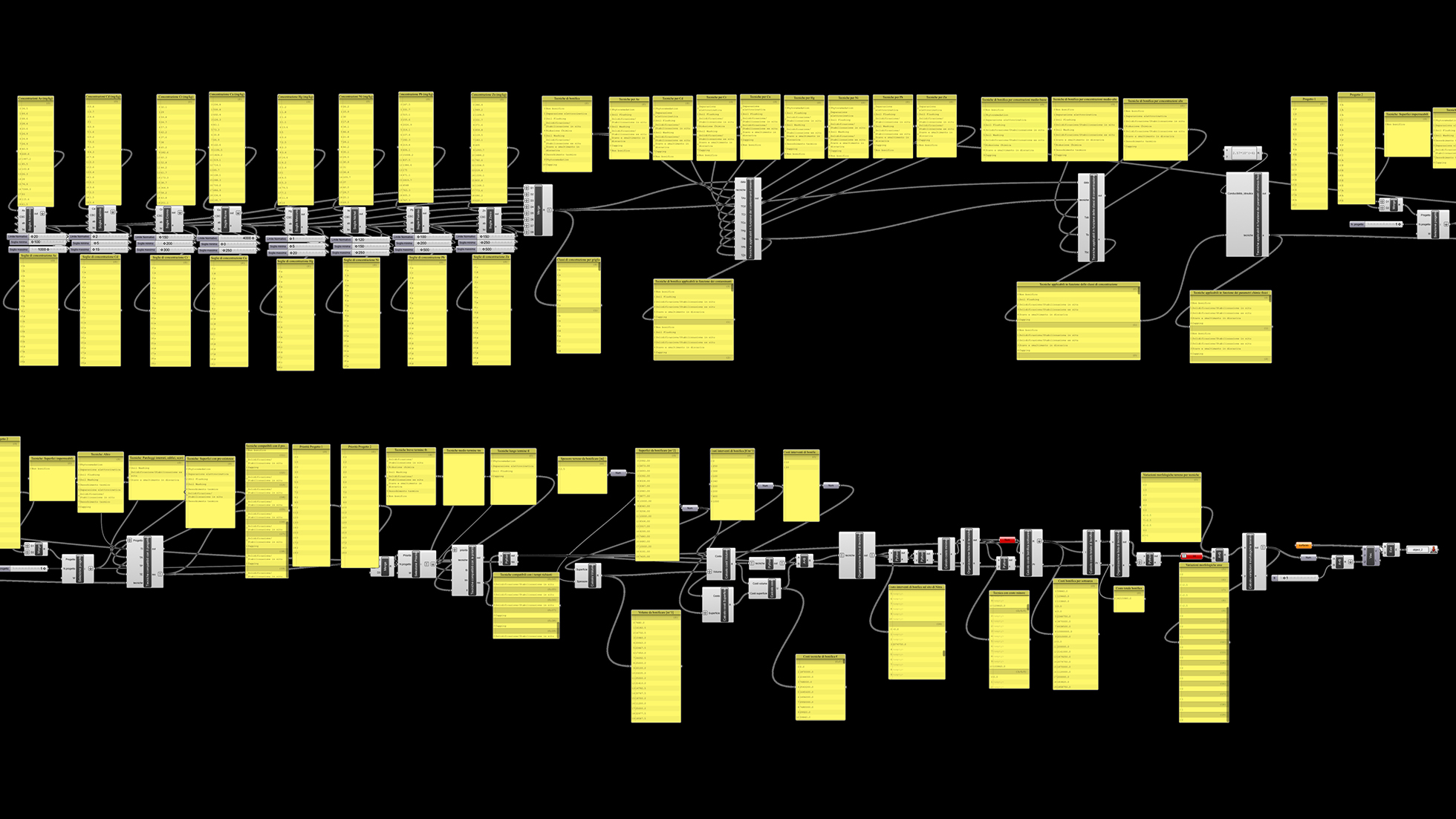
È stato quindi definito l’approccio AdRem (Adaptive Remediation), volto a integrare le diverse discipline (in particolare, ingegneria ambientale e architettura) coinvolte nella progettazione del riuso di aree industriali dismesse, specificamente applicato ai contesti urbani. Nell’ambito del progetto, è in fase di sviluppo un prototipo di toolkit di supporto alle decisioni per aiutare a selezionare quantitativamente e prioritizzare le alternative progettuali praticabili. Il toolkit è coinvolto nella fase di progettazione interdisciplinare elaborando insiemi di tecniche di bonifica e soluzioni architettoniche/urbane, sulla base dei dati raccolti e dei vincoli definiti dall’utente. Gli scenari di bonifica/riutilizzo vengono generati al computer e selezionati confrontando le alternative di bonifica e le esigenze progettuali. Gli scenari praticabili vengono quindi prioritizzati in base a costi e tempi. I risultati del toolkit orientano l’ultima fase di progettazione nel framework AdRem, quando i progettisti ambientali e architettonici identificano il progetto integrato ottimale, utilizzando infine il toolkit in modo ricorrente modificando i parametri di input e i vincoli, sulla base di nuove soluzioni progettuali.
Future developments of the toolkit will aim at a better interoperability, in input and output, with existing software and formats used in risk analysis, architectural design and geographic information (GIS).