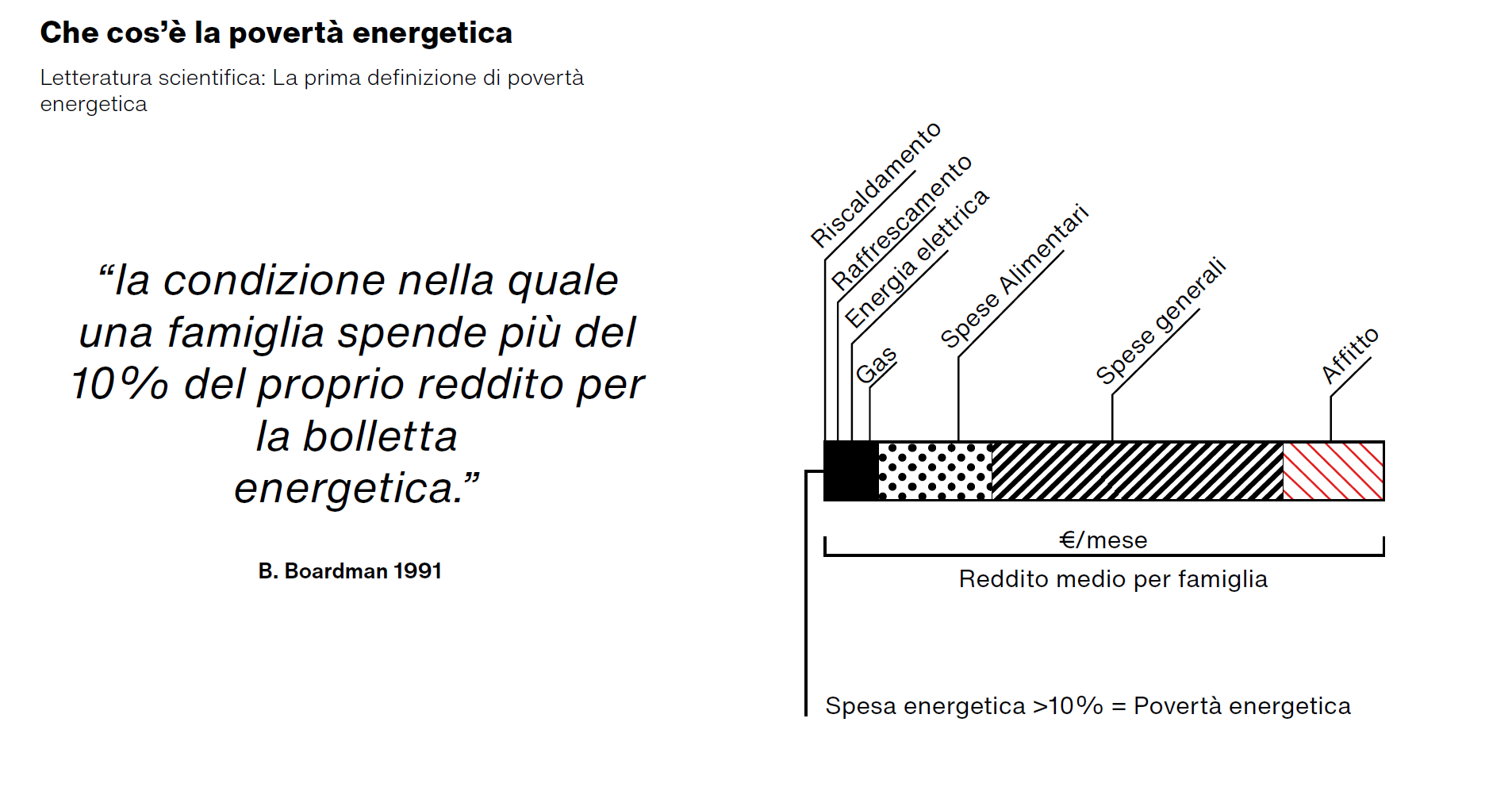
The problem of energy poverty in Italian households – that is, the difficulty of sustaining the expenses for essential energy services (which mainly include heating, cooling, hot water and electrical uses related to lighting and appliances) in order not to compromise health and well-being in the home – is certainly not new. Expenses related to the functioning of the home have always been taken into account, together with others usually considered more relevant (e.g. those related to mortgage or rent), to identify profiles of housing deprivation or vulnerability; it is no coincidence that expenses related to energy supply and maintenance of domestic systems have long been included in the ISTAT basket that allows us to assess statistical variations in household expenses. And the topic of energy poverty has long been explored by various disciplinary fields (e.g. sociology, economics, engineering and architecture). However, as is commonplace to note, in the context of today’s economic-energy crisis this issue takes on a new and more pressing centrality. This centrality is both social (energy poverty threatens to have a significant impact on the quality of life of millions of people) and political (the fight against rising energy costs borne by households is one of the main lines of development of European policies and consequently one of the central points of the national government agenda)
The research
This research project aims to answer two main nuclei of research questions.
The first is an analytical-descriptive core. It revolves around the following questions: What impact does the rise in energy costs have on the daily lives of households? What strategies are deployed by households to cope with it?
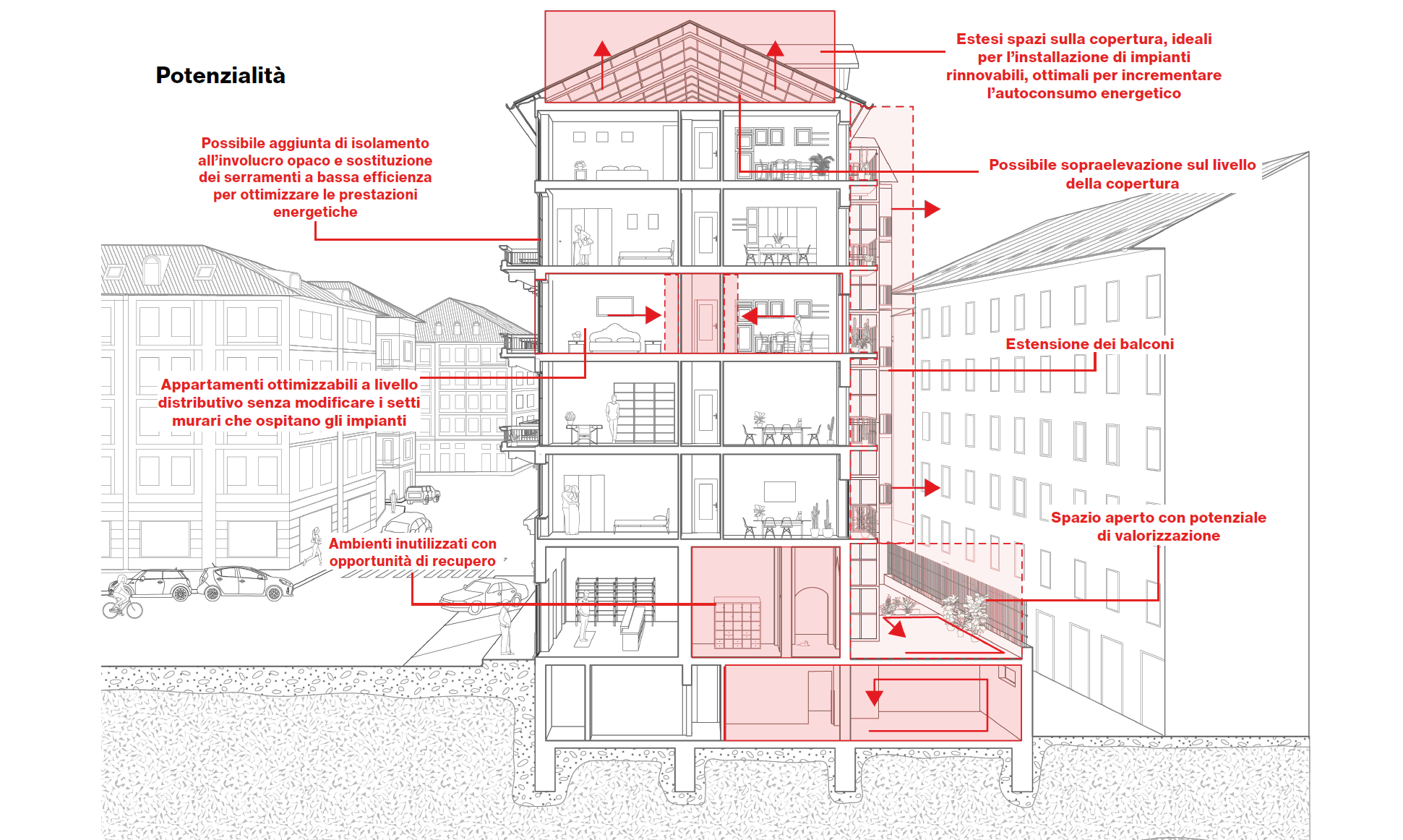
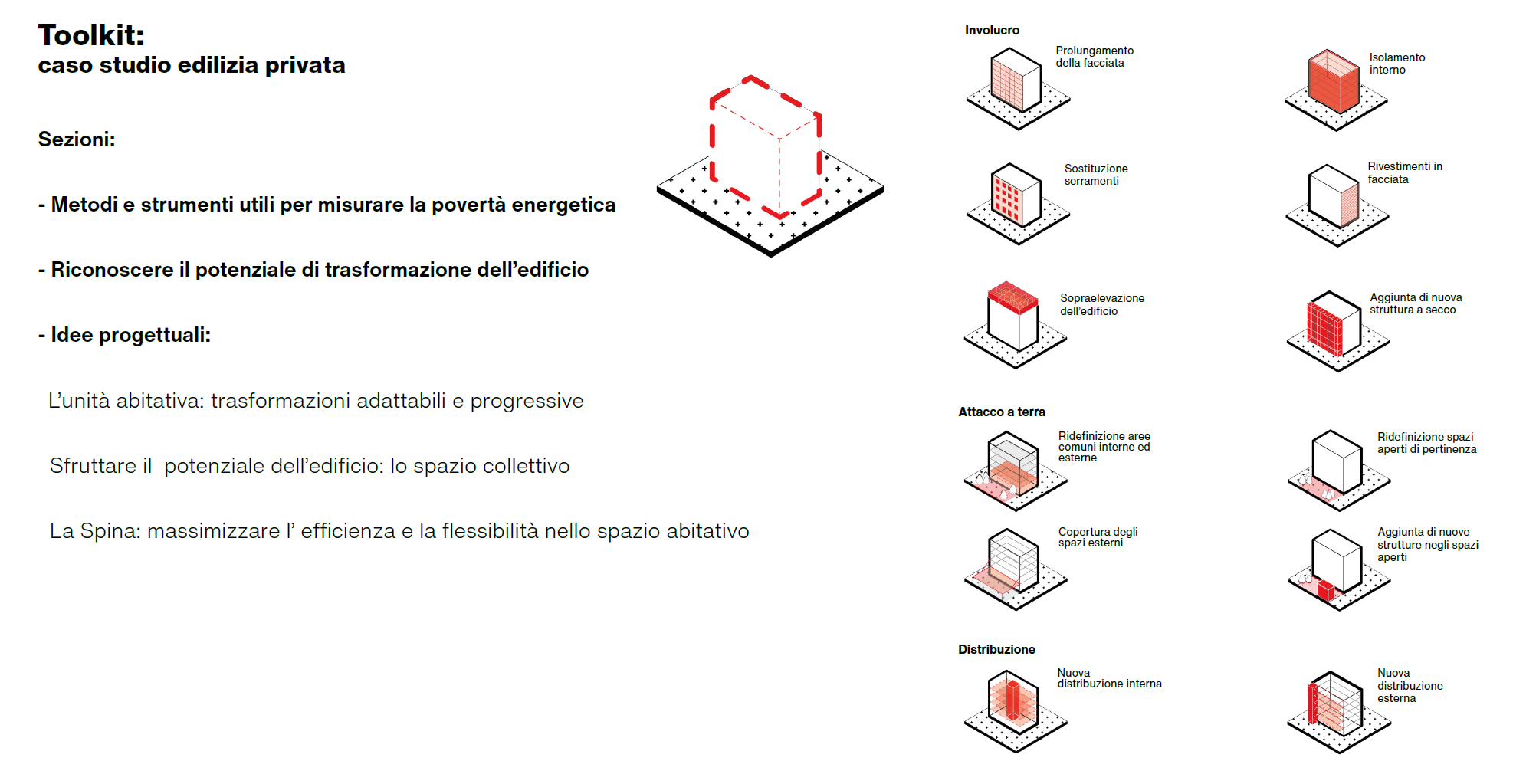
The second core is prescriptive. It revolves around the following questions: What interventions can be put in place to reduce energy consumption in households? How much of an impact can each type of intervention have on a household’s energy expenditure? From this point of view, three types of intervention will be analysed: i) interventions linked to the modification of individual behaviour; ii) interventions at the scale of the individual dwelling unit, linked to minor modifications of certain technical elements (e.g. replacement of light sources, radiator efficiency); iii) more radical interventions, of an architectural-constructive nature, to be carried out mainly at the scale of the building (or relevant portions of it).
The project focuses on a limited number of case studies: a number of apartment blocks (and their resident families) located in Turin, both public and private, will be considered.
Case study: public assets managed by ATC
In the case of public property, the first phase of the research aims to
- contact resident households in ATC buildings to carry out qualitative interviews (about 50) and investigate behaviour and strategies regarding energy use and cost containment;
- collect technical project drawings to understand the condition of the estate (plans, elevations, sections, surveys or inspections, public or private ownership of the dwellings, information on technology, materials, construction details, data on heating and plumbing systems).
Research results
The research aims to produce, in addition to the traditional academic outcomes, intermediate outcomes of a dissemination nature, intended for public administration and non-academic communication.