The CROSSGOV project addresses a central challenge of contemporary European governance: bridging the gap between political recognition of cross-border cooperation and poorly operationalised institutional solutions. In spite of progress through economic (single market, Interreg programmes), institutional (EGTCs, Eurodistricts) and functional instruments for public service delivery, significant gaps in effective governance mechanisms persist.
Border regions in the ESPON (European Spatial Planning Observation Network) area face complex obstacles that transcend legal and administrative dimensions, involving economic, political, cultural, cognitive and interpersonal aspects. The diversity of contexts – characterising the 27 EU Member States plus Iceland, Liechtenstein, Norway, Switzerland and the United Kingdom – requires specific bottom-up approaches for multi-level cooperation, going beyond traditional ‘universal’ solutions.
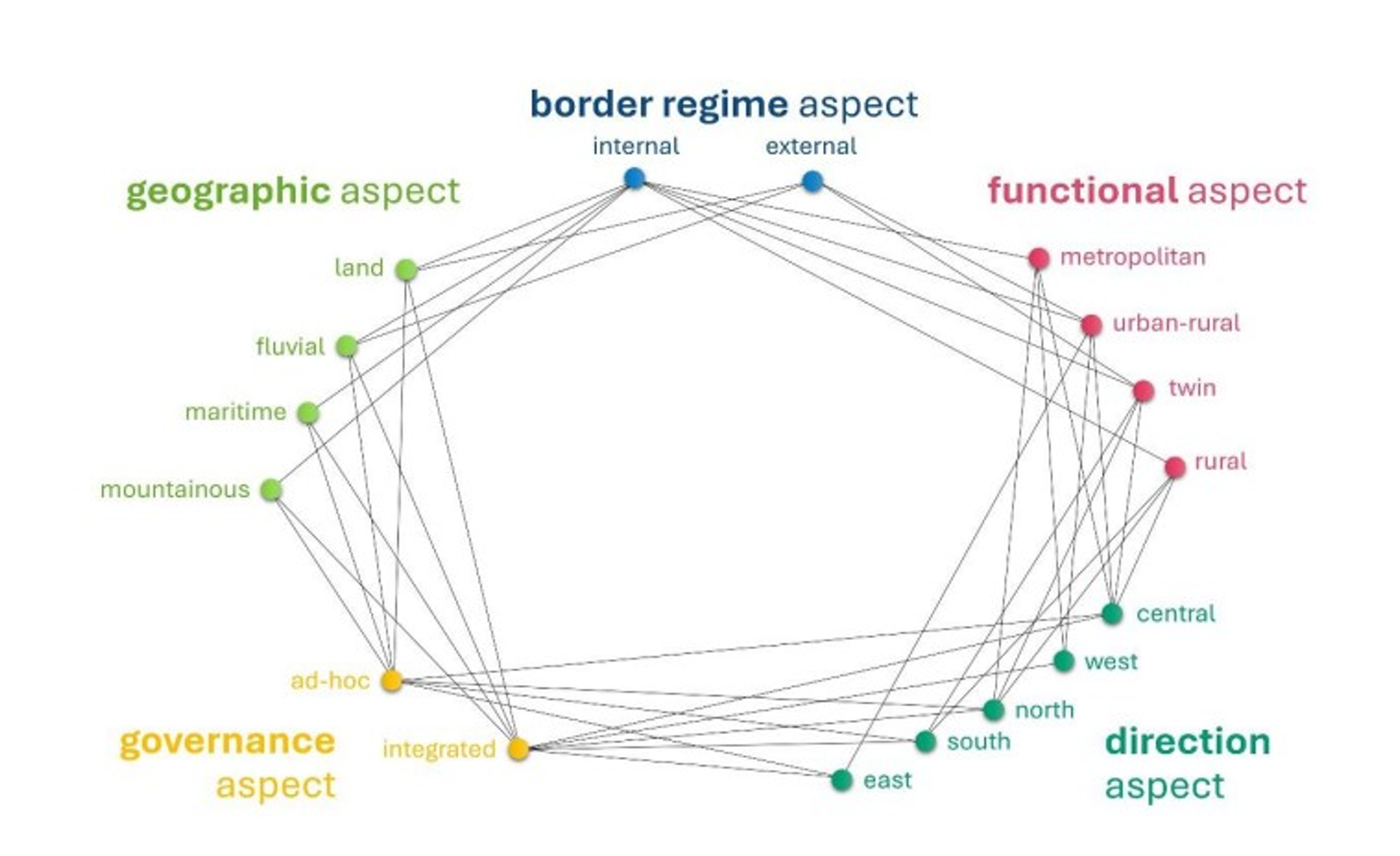
Developed under the ESPON 2030 programme, CROSSGOV proposes an innovative approach centred on cross-border functional areas as a means of reducing barriers and facilitating the flows of people, goods, materials and knowledge. The perspective adopted goes beyond traditional definitions of ‘border regions’, developing new analytical frameworks to understand real interactions across administrative borders.
Integration is analysed through two dimensions: spatial interactions based on flows and barriers, and convergence of spatial characteristics driven by processes of homogeneity and discontinuity. However, these areas remain inadequately explained in their daily activities, representing a knowledge gap for European cohesion policies.
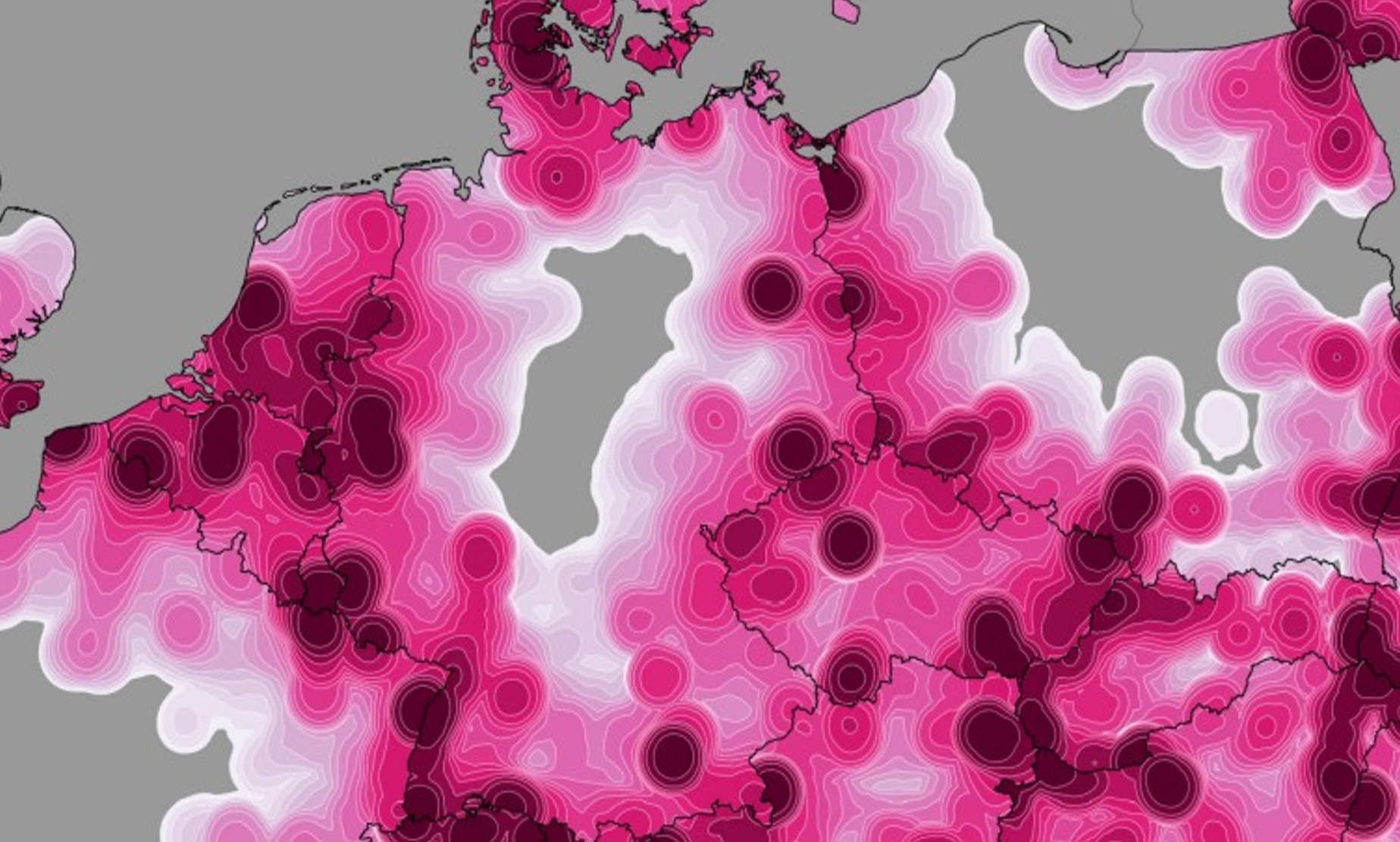
The methodology combines official Eurostat statistics, georeferenced big data and advanced web scraping techniques to dynamically represent functional areas. The main challenges include: scarcity of harmonised European data, lack of systematic information on functional flows (labour mobility, access to services, production networks), and complexity in the cartographic representation of institutional-territorial intertwining.
Comparative mapping, interactive visualisation and spatial analysis are the key tools to support more effective and evidence-based cooperation policies. The objective is to provide rigorous scientific understanding of functional areas and to formulate concrete recommendations for improving governance mechanisms in the ESPON space.
The research examines status quo and unexpressed potential of functional integration, identifying drivers, structural obstacles, emerging opportunities and evolutionary trends. Specific focus on multi-level governance mechanisms applicable to different European contexts.
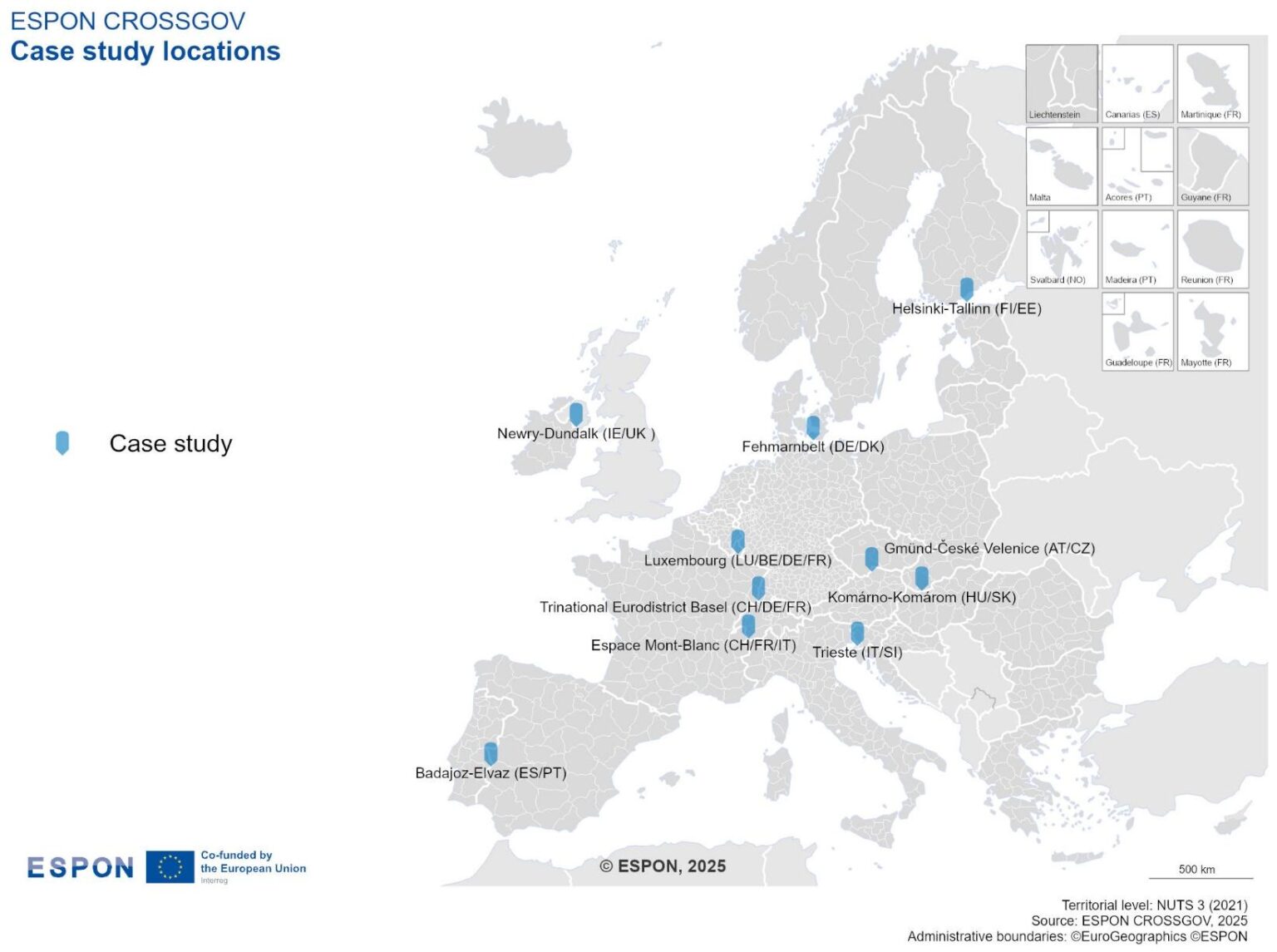
FULL is also currently implementing two strategic case studies: the Espace Mont Blanc (Italy-France-Switzerland), an Alpine area with high functional integration and consolidated governance, and the Trieste Karst (Italy-Slovenia), a post-frontier region in the process of re-integration. These cases will make it possible to empirically test the models developed and develop recommendations that can be transferred to other European contexts.