Under the High Patronage of the President of the Republic, Palazzo Madama – Turin’s Civic Museum of Ancient Art presents an exhibition which, together with a wide-ranging regional project, aims to explore the theme of the climate crisis, offering a synoptic view of the changes that have taken place over thousands of years along the course of the River Po, a paradigm of what is happening on a global scale.
The project was developed in collaboration with the City Council’s Department for Urban Care, Public Green Areas and Riverbanks of the City of Turin and the collaboration between Palazzo Madama and key national partners, who have always been committed to environmental conservation and protection, primarily the Po River Basin Authority (ABDPO) and the Interregional Agency for the Po River (A.I.Po) together with the Po Biosphere Reserves, now united in the UNESCO MaB Po Grande Reserve. Alongside them are Turin-based interpreters, from the Polytechnic University of Turin to the University of Turin and the European Research Institute, who carry out daily research and study of the Po and water in general from different disciplinary perspectives, with the media partnership of Rai Radio3.
Addressing the essential issues of climate change in an exhibition that weaves together a visual narrative developed entirely through the interaction between large-scale painting and photography, illustration, and infographics capable of narrating the Italian landscape in all its complexity and articulation, from the Alps to the sea, the exhibition project focuses on the theme of water and in particular on our Great River, which for millennia has determined the landscape and the life of the population, is a means of communication but also an essential support for agricultural and industrial activities, and explores the consequences and analyzes the potential solutions implemented in the area by the various research and protection agencies of the Po.
652 kilometers long, 141 tributaries, almost 87,000 square kilometers of river basin, 19,850,000 inhabitants, 37% of Italian agricultural production, 55% of the national livestock industry: the Po and the Po Valley, where 40% of the national GDP is produced, constitute one of the areas with the highest concentration of population, industry, and commercial activity in Europe.
This incredible development has been made possible thanks to the historic stability and abundance of Italy’s largest river, which is fed by countless sources and diverse natural processes—mountain springs, snowmelt, glaciers, large lakes, and plains springs—but which have undergone significant change in recent decades, leading to a crisis that is occurring everywhere on a global scale.
Precisely because of its unique characteristics and its wealth of history, historical stratification, and landscapes, the Po—Roman and pagan, Byzantine and Lombard, feudal and ruled by lords, countryside and cities, romantic, agricultural, industrial, touristic, and cinematic—is capable of symbolically and clearly conveying the climate crisis and its effects: the face of the planet is changing more rapidly than it has done in the last millennia, and the role that humans have played in this process has now been proven.
The Change! exhibition aims to describe these changes, offering opportunities to reflect on the crisis and possible scenarios for adapting to it, but also to urge action and awareness: it is time to act.
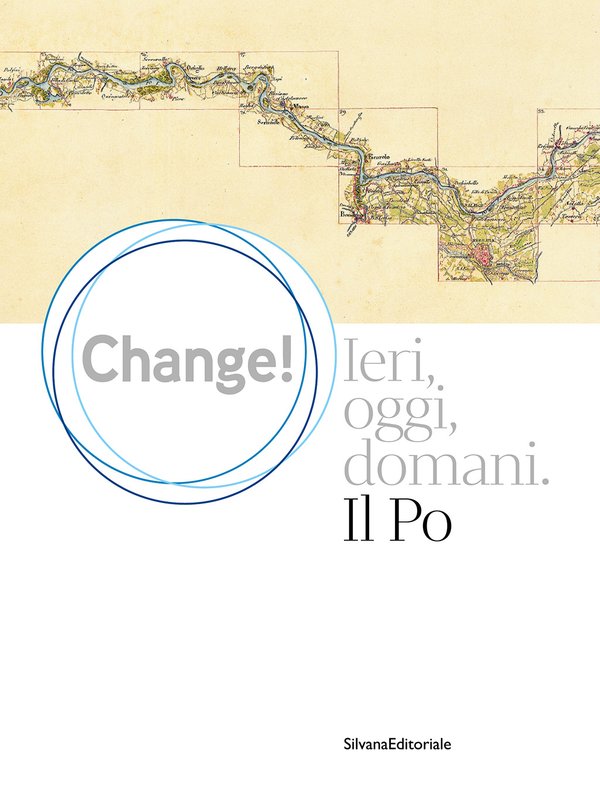
Change!, curated by Tiziana Caserta, Anna La Ferla, and Giovanni C.F. Villa, is accompanied by a catalog published by Silvana Editoriale, with contributions from scholars at the University of Turin, the University of Bergamo, the Polytechnic University of Turin, the Polytechnic University of Milan, ENEA, Slow Food, Adaptation.it, and Mondoserie.it, among others.
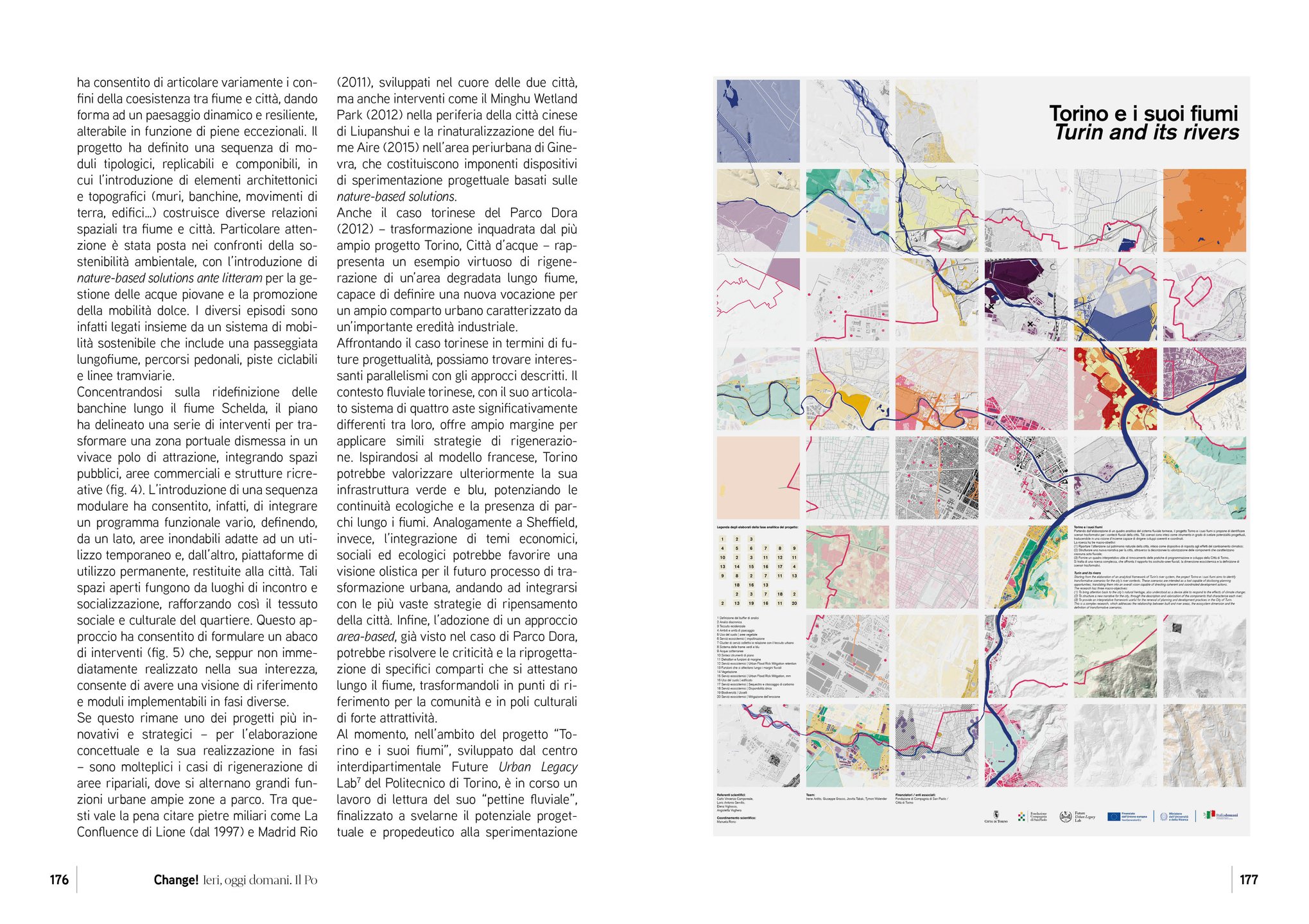
Change! Ieri, oggi, domani. Il Po. (Milano: Silvana Editoriale, 2024), ISBN 978-88-3665-882-4: 170-179, catalog of the exhibition Change! held at Palazzo Madama, Turin.