If the 2008 economic-financial crisis had a profound impact in terms of access to housing (especially for low- and middle-income households), the pandemic crisis has not only aggravated this picture but has also partially changed households’ perception of the desirable characteristics of a home (with a new focus, for example, on the importance of balconies and gardens). Against this backdrop, it appears indispensable – not only in terms of academic research, but also and above all in terms of public policy – to have a clear and precise picture of the current characteristics of housing demand and supply in our country.
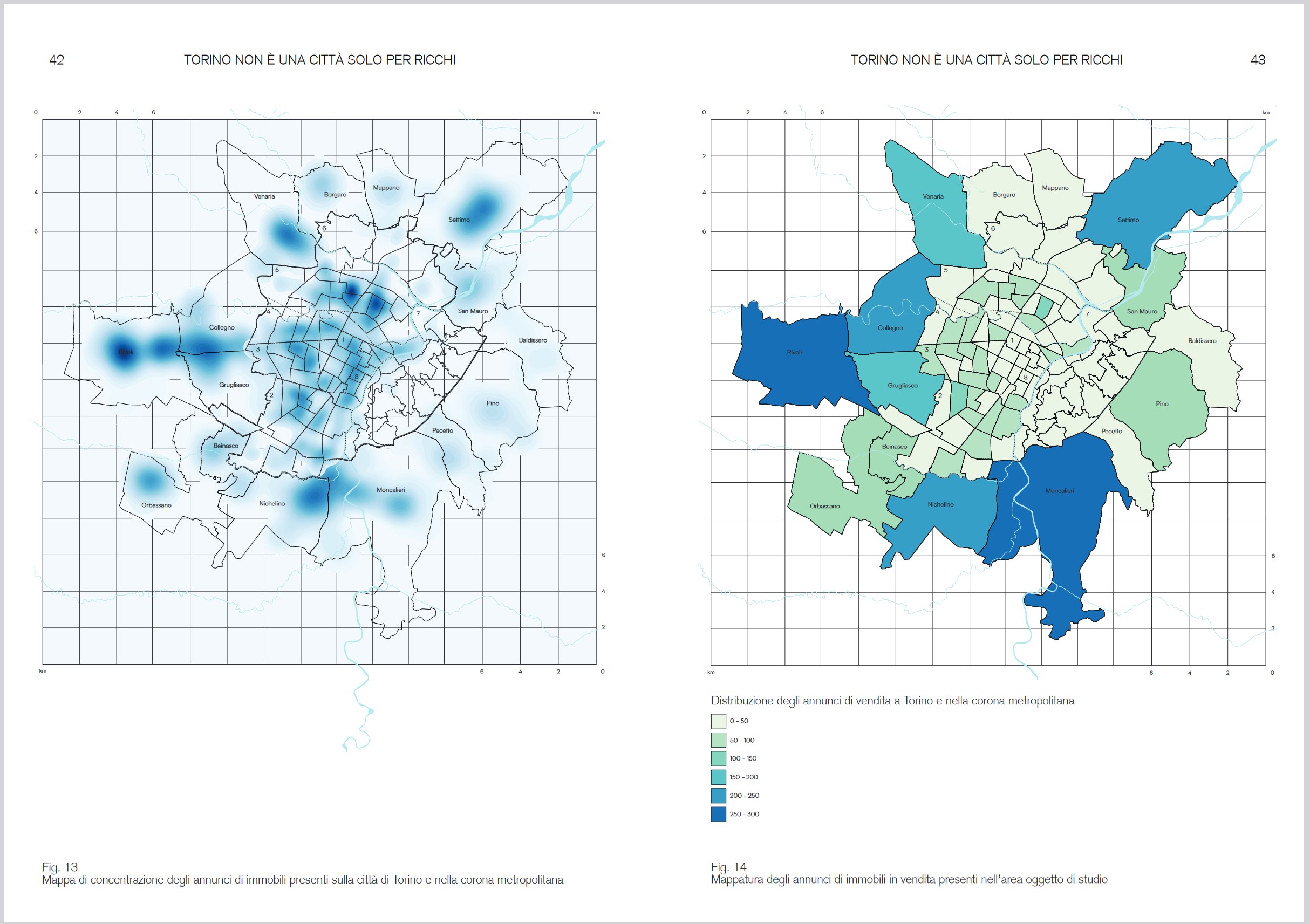
The paper aims to contribute to shedding light on the state of the (post-)pandemic housing market, focusing in particular on the supply available to the so-called ‘off-market generation’ and asking to what extent the combination of the economic-financial crisis and the pandemic crisis has increased the barriers to access to housing for this group. In order to do so, the case study of Turin and the municipalities in its metropolitan area is analyzed, with respect to which the availability of private housing for sale and rent is investigated, read in connection with some relevant characteristics of this stock (e.g. location, price, and square footage). The reference year is 2021, ‘suspended between past and future’.
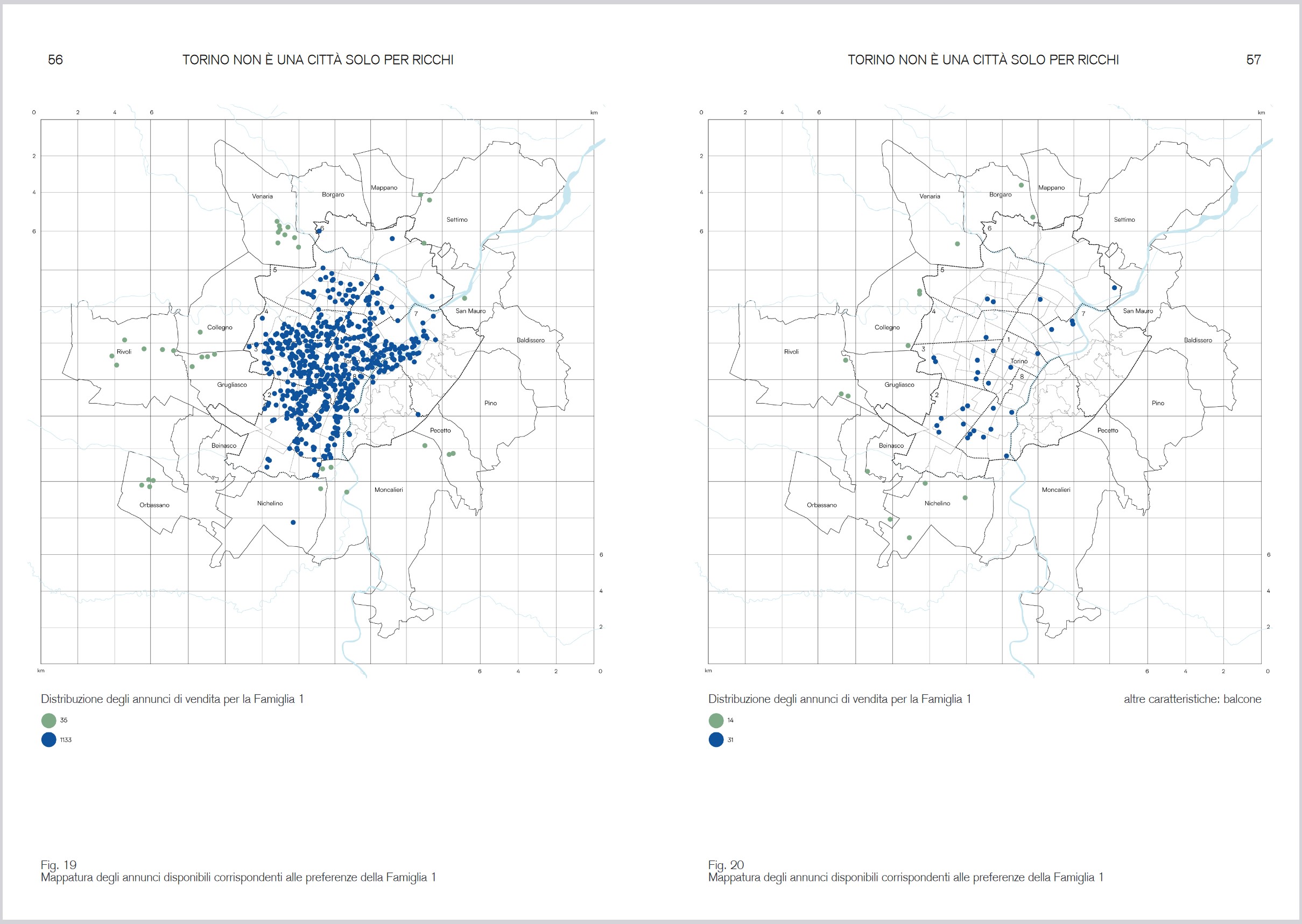
After having presented the analysis of data on the availability of homes for rent and for sale – which are presented mainly in the form of maps – this report concludes with two fictitious but absolutely plausible examples of ‘typical households’ belonging to a lower-middle income bracket, looking for a home in the city of Turin and its hinterland. By investigating the private supply available in relation to the needs of these two families, it is possible to understand, in concrete terms, the problems and prospects of housing accessibility in the (post-)pandemic period in and around Turin.