As is well known, Airbnb is an online platform for temporary rental that acts as an intermediary between host (the person hosting) and guest (the person being hosted). The host can be the owner of the property or a third party who manages the accommodation unit (e.g. a real estate agency or entrepreneur).
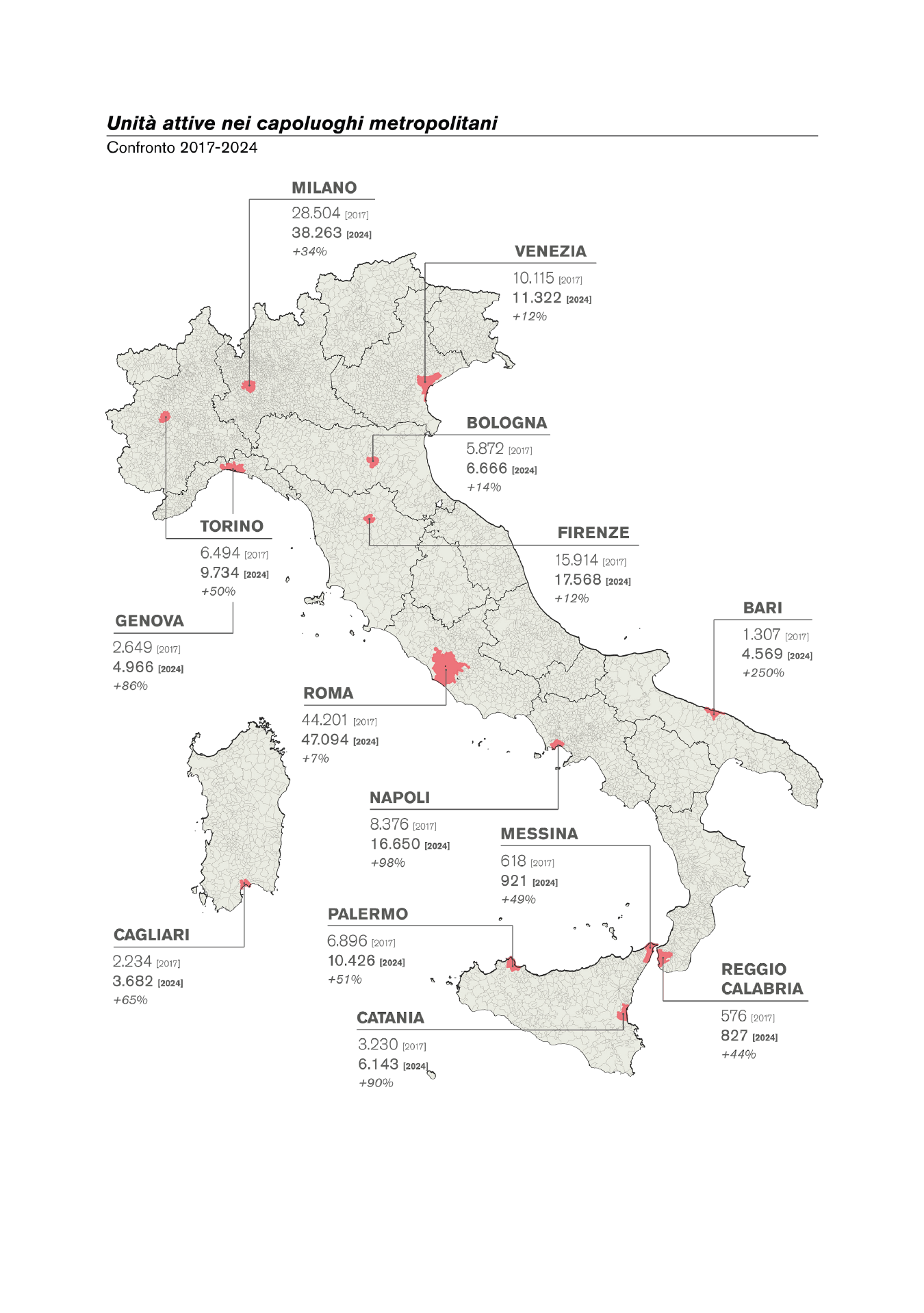
In Italy, short-term renting through Airbnb has profoundly influenced not only the tourist offer sector but also, more generally, the residential, social and commercial landscape of many territories, thus becoming the subject of heated public, political and academic debate. Against this backdrop, it seems useful to provide up-to-date data that allow us to understand the phenomenon at different territorial scales as a basis for robust academic reflection, informed public discourse and effective public policies.
In this report, we propose a nationwide analysis of the ‘Airbnb phenomenon’, taking into consideration the period 2017-2024. The data used are extracted from the AirDNA databases, a global provider of data on short-term rentals. After presenting an overview of demand, supply and performance, the report provides an in-depth look at the different types of hosts (managers of accommodation units) active in Italy.
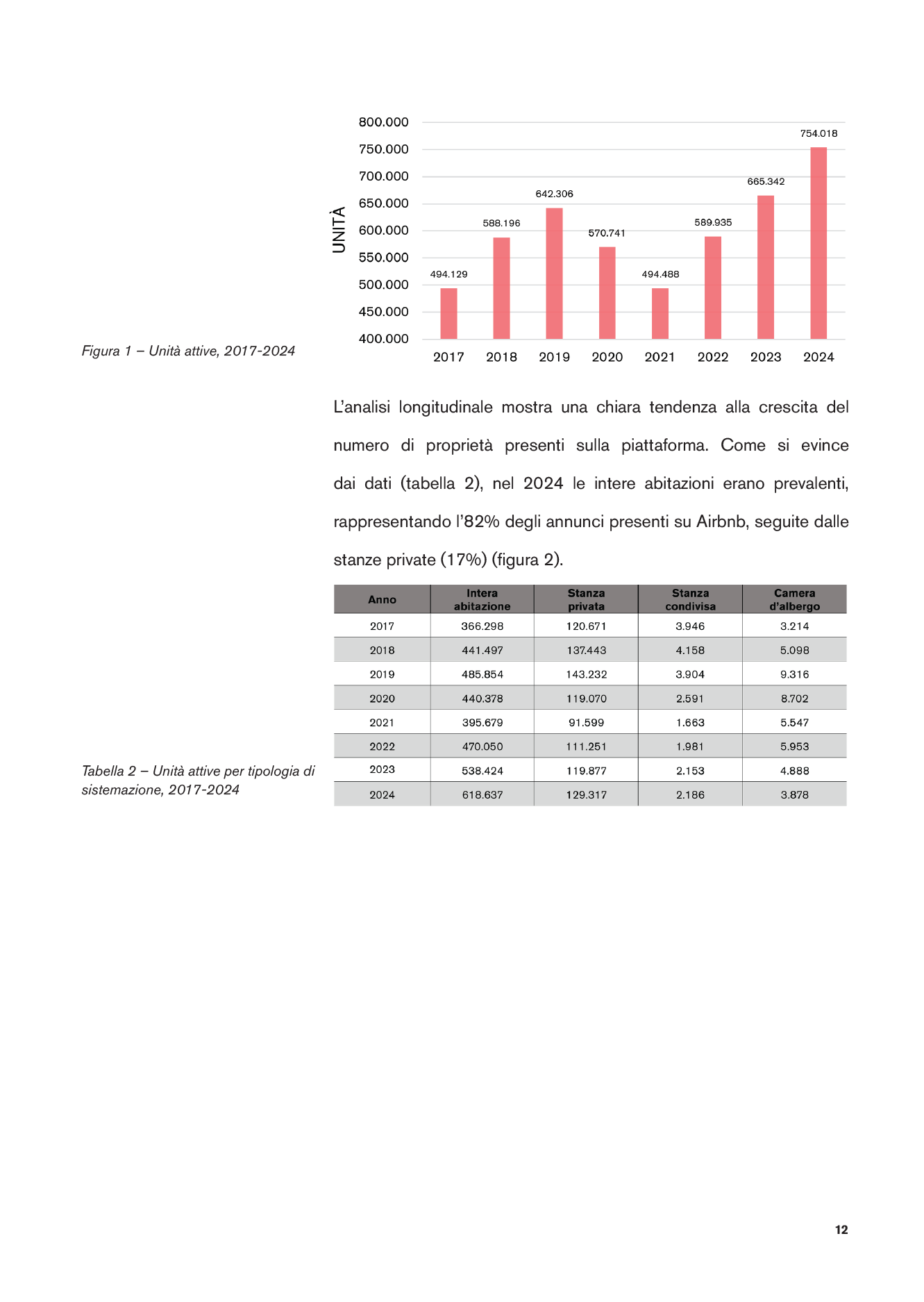
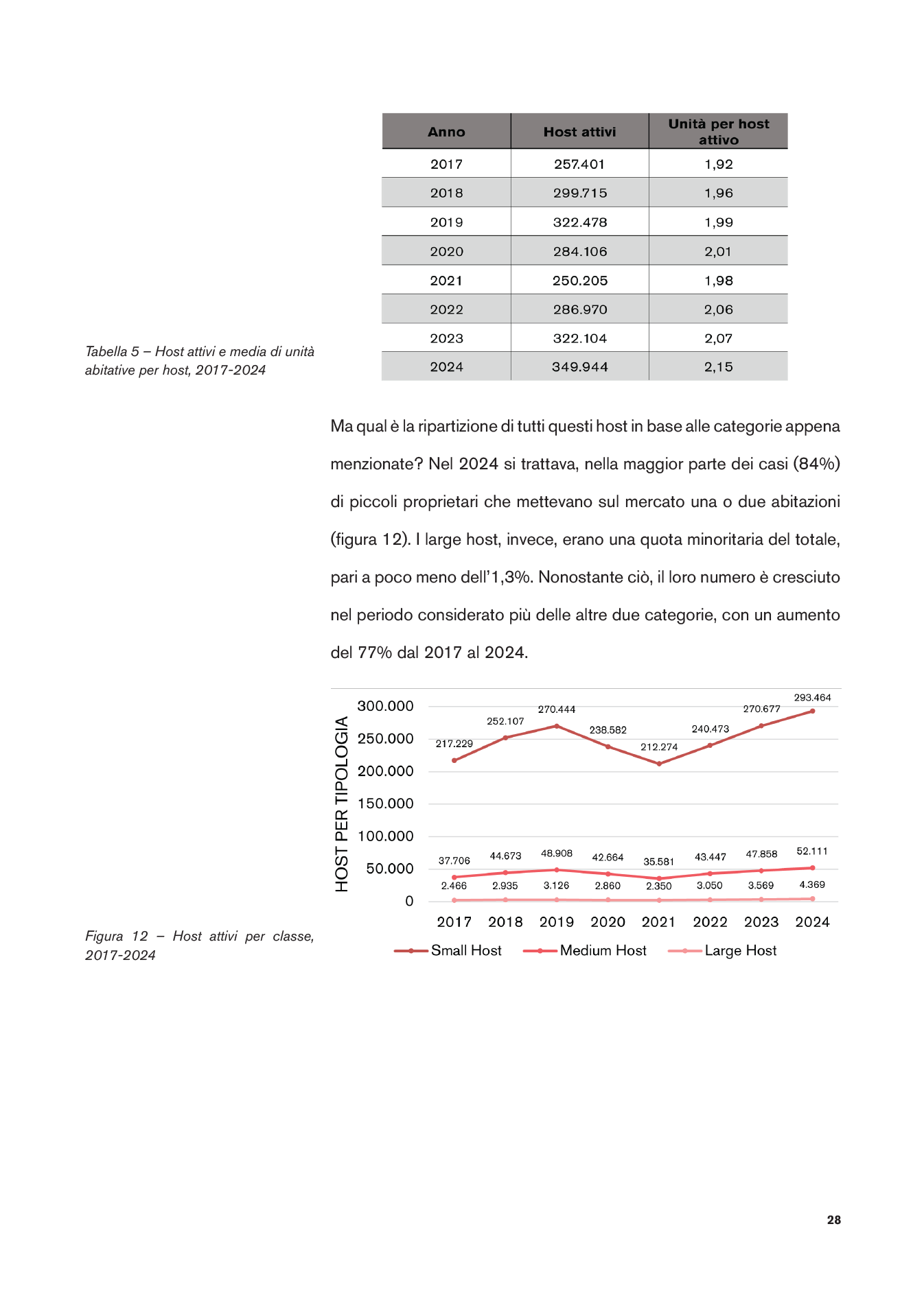
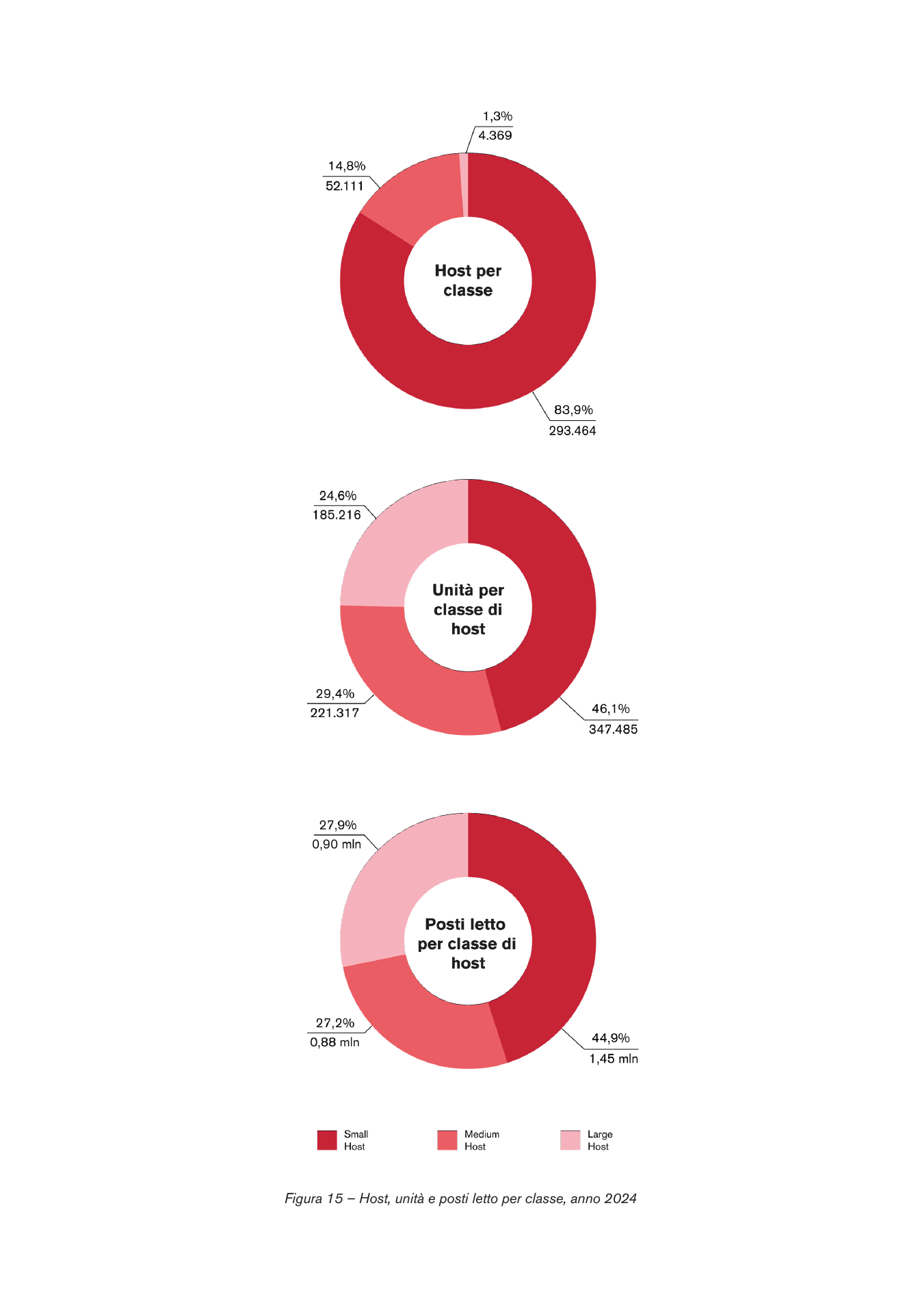
An unequivocal picture emerges: impetuous growth in both the number of lodgings available on the platform (+52%) and their profitability (+124%, or 11,700 euros per lodging in 2024). At the same time, the weight of players professionally managing a substantial number of lodgings (in the order of several dozen) is growing: +77%, so that they now hold almost 30% of the available beds. Data available to anyone wishing to reflect on the state of the sector and attempts to regulate it.