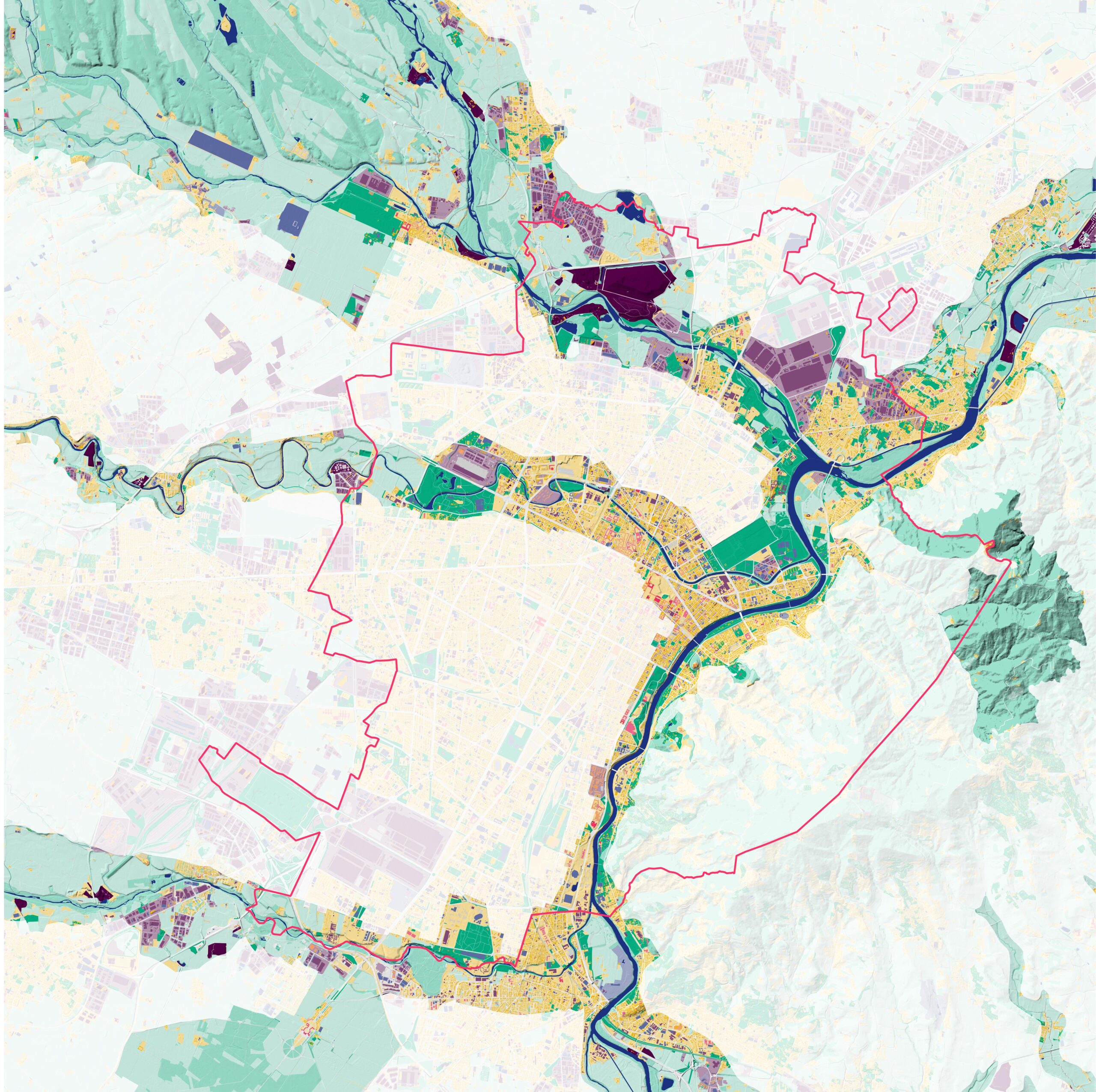
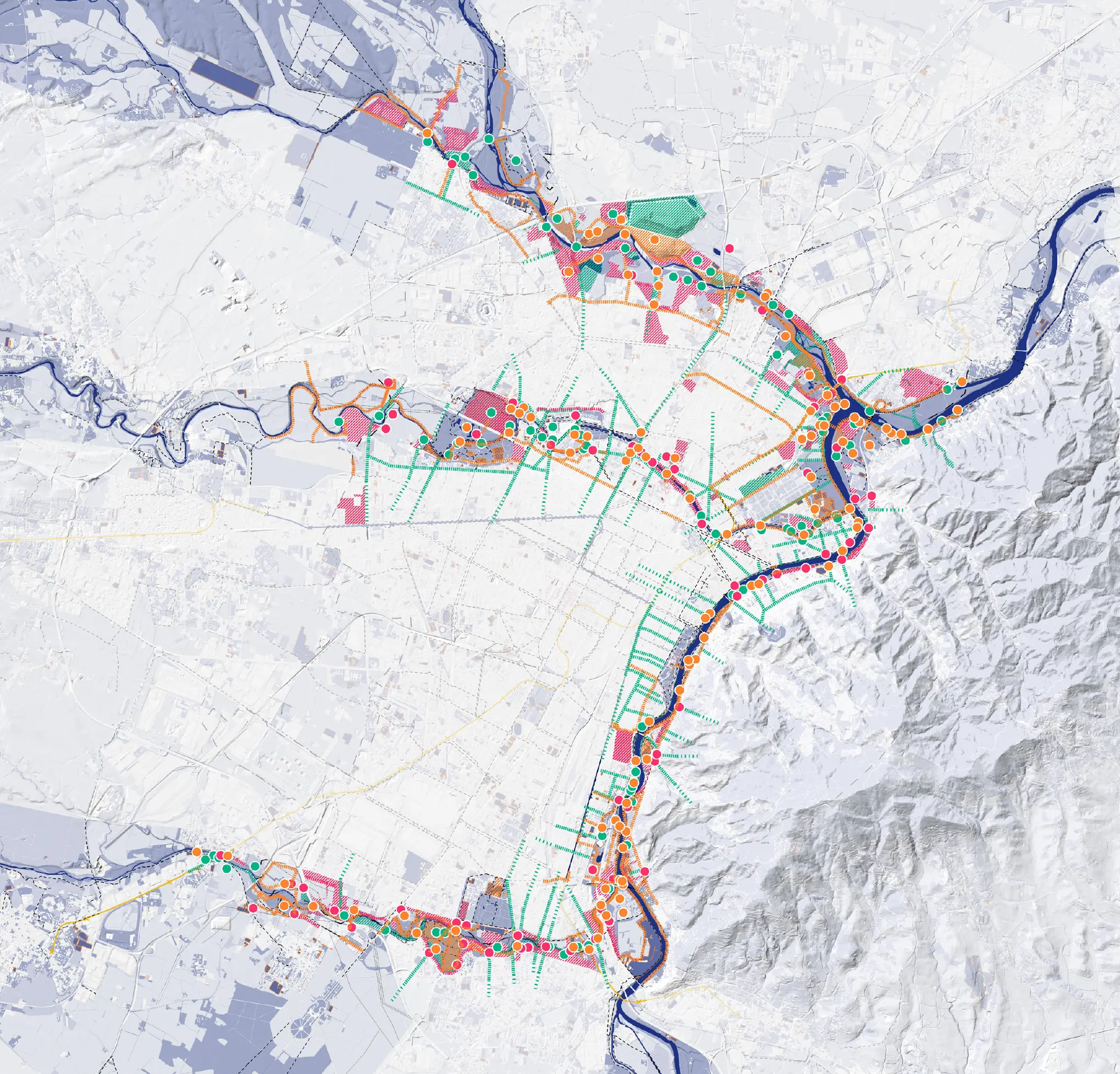
The research project Turin and its rivers is the result of collaboration between the Polytechnic University of Turin, the Municipality of Turin and the Compagnia di San Paolo, with the aim of rethinking the role of the river system in the contemporary transformation of the city. The research is based on the assumption that Turin’s four rivers — the Po, Dora Riparia, Stura di Lanzo and Sangone — constitute a set of ecological corridors that cross the urban fabric and connect it to the surrounding metropolitan area. From this perspective, the river system represents an environmental infrastructure of great importance, capable of contributing significantly to combating climate change, ecological regeneration and improving the quality of life of the city’s inhabitants and users.
Starting from the development of an analytical framework for Turin’s river system, the project Turin and its rivers aims to identify transformation scenarios for the city’s river contexts. These scenarios are intended as a tool capable of revealing planning opportunities, translating them into an overview capable of guiding coherent and coordinated development actions.
The research has three macro-goals:
(1) To bring attention back to the city’s natural heritage, also understood as a powerful device to respond to the effects of climate change;
(2) To structure and promote a new narrative for the city, through the systemic description and valorisation of the components that characterise each river;
(3) To provide an interpretative framework useful for the renewal of planning and development practices in the City of Turin.
The research deals with a complex topic, addressing the relationship between built areas and river context, the ecosystem dimension and the definition of transformative scenarios.
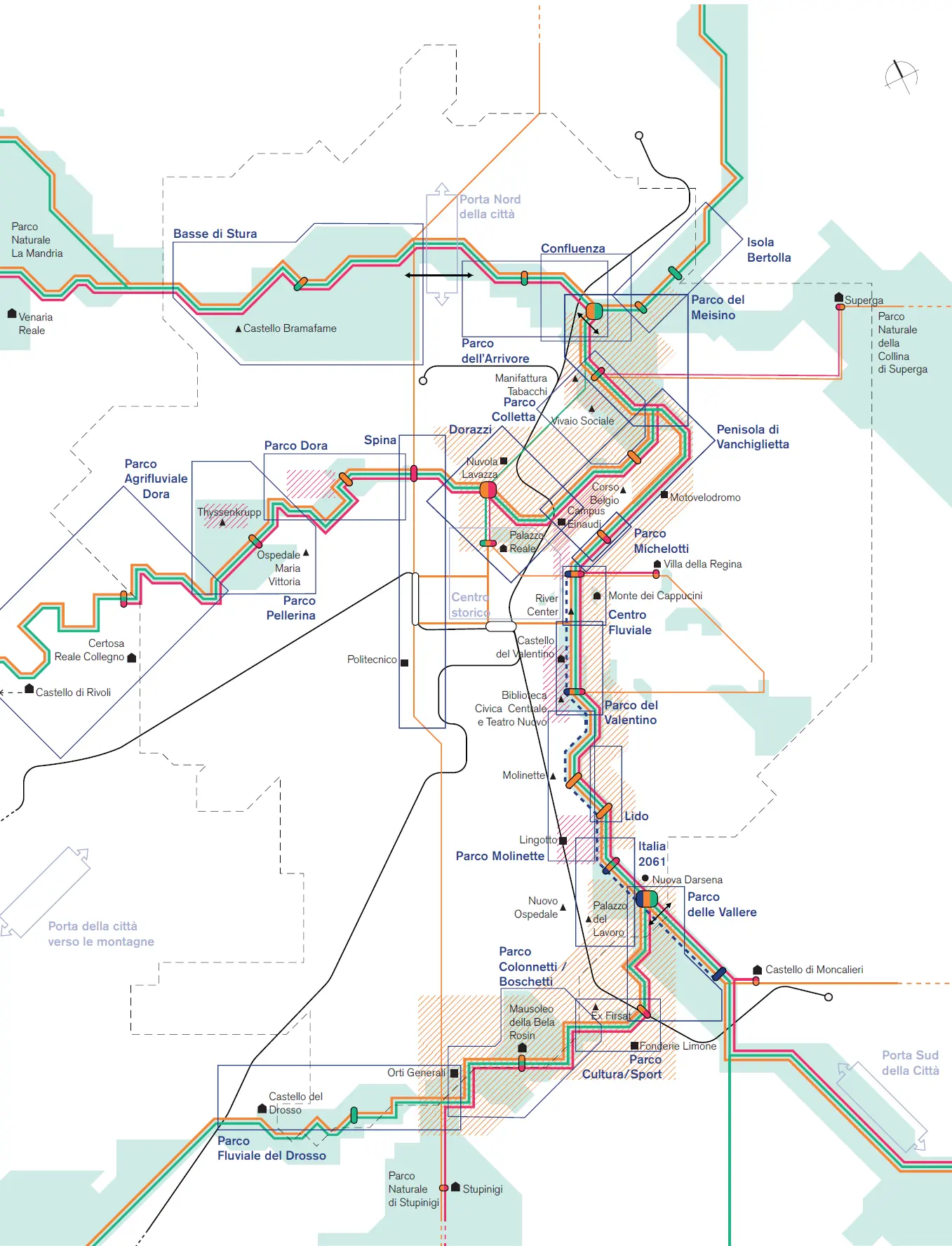
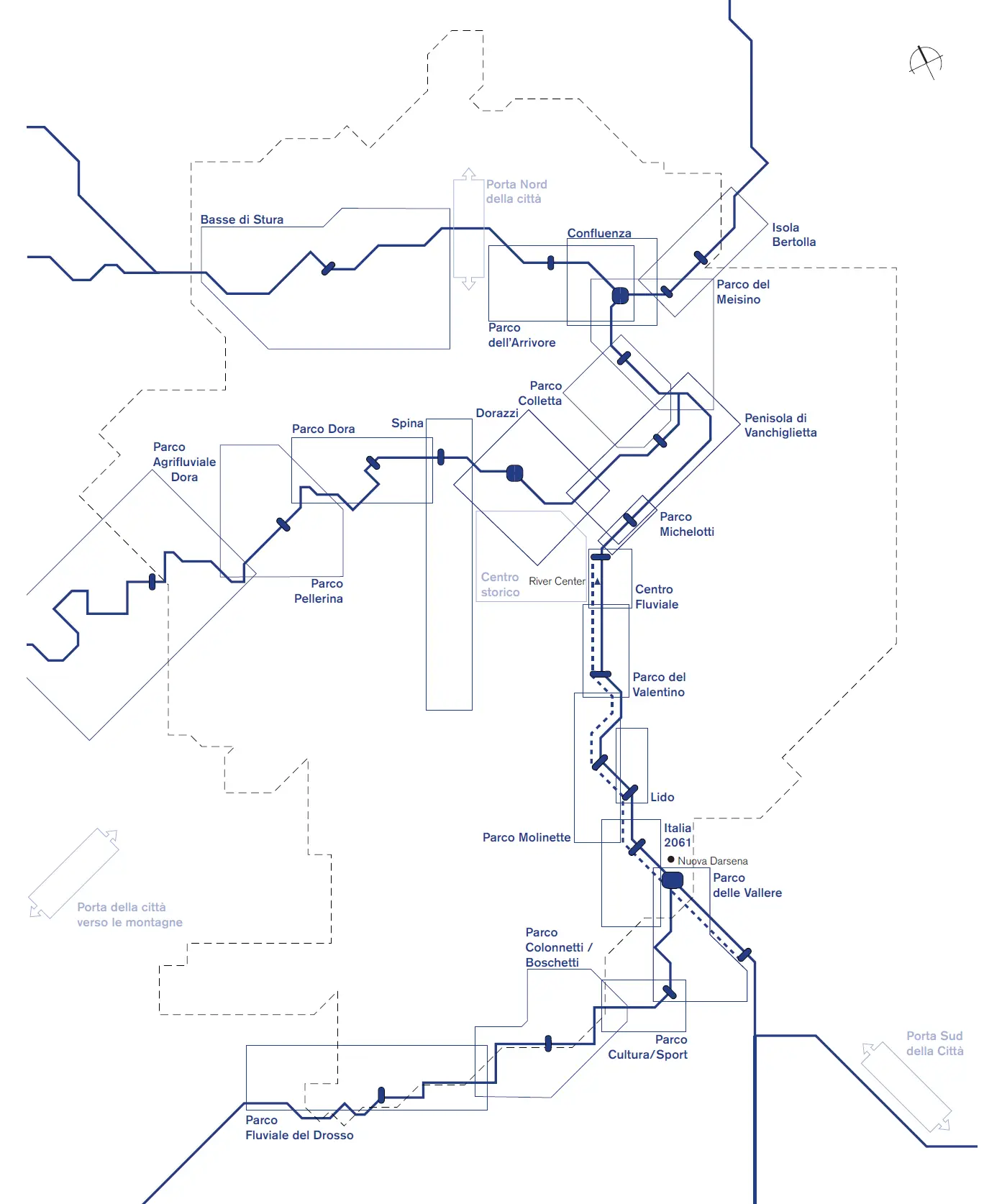
The research assumes that Turin’s four rivers, understood as ecological corridors connecting the city to the metropolitan area, can play a crucial role in combating climate change and improving the quality of urban life. The study investigates the potential of the ‘Blue Comb’ with the aim of defining a strategy to strengthen its ecological, social and economic role. Through three interpretative lenses — ecological city, inherited city and city of leisure — the research identifies a sequence of actions to reactivate the untapped potential of the river corridors and renew the relationship between the urban core and the metropolitan area.
The proposed framework of interventions enhances and renews existing areas that have so far played a marginal role in urban policies, assigning each one a function consistent with its characteristics and capable of generating positive effects on the entire city. The research ultimately translates into nine strategic projections, which redefine the narrative of Turin’s four rivers and identify new urban centres, reaffirming the link between natural resources, the built landscape and the development of the city in its relationship with the surrounding area.
Throughout Turin’s urban history, rivers have played multiple and changing roles: a strategic resource for productive and industrial development, a structuring element of the urban form, but also an urban margin progressively marginalised by infrastructure, urbanisation processes and economic transformations. The research therefore proposes to reinterpret these river basins as an integrated system — defined as the ‘Blue Comb’ — which could become one of the main interpretative and design keys for contemporary Turin. The aim is to identify strategies and actions capable of renewing their ecological, social and economic role, enhancing their potential as environmental corridors and spaces for interaction between the city and the surrounding area.
The analysis is developed through the three interpretative perspectives mentioned above — ecological city, inherited city and leisure city — which allow the river system to be observed from different and complementary points of view. The lens of the ecological city highlights the role of rivers as natural infrastructures capable of strengthening urban environmental resilience, improving biodiversity and contributing to climate adaptation processes. The perspective of the inherited city, on the other hand, analyses the relationship between rivers, built heritage and historical processes of urban transformation, highlighting how the river landscape is the result of a stratification of urban practices, infrastructures and morphologies. Finally, the lens of the city of leisure explores the potential of rivers as spaces for public enjoyment, leisure and socialising, highlighting the role that these places can play in the construction of new forms of urban habitability.
Starting from these three perspectives, the research identifies a series of strategic areas along watercourses and proposes a sequence of actions aimed at reactivating the currently untapped potential of the river system. The overall programme of interventions focuses in particular on existing urban contexts which, despite possessing significant environmental, landscape or social characteristics, have so far played a marginal role in urban policies and public investment. The proposed meta-project suggests that each of these areas could take on a specific function consistent with its territorial character and, at the same time, generate positive effects on the entire urban system.
The research ultimately leads to the definition of nine strategic projections, understood as possible trajectories for the transformation of Turin’s river system. These projections derive from a comprehensive rethinking of the urban narrative linked to waterways and the discovery of new potential focal points along their course. The meta-project thus focuses on some of the structural characteristics of the city crossed by rivers, recognising the value of the relationship between natural and ecological resources and the built landscape, which has been established over time through historical processes and urban transformations. From this perspective, the research proposes to reaffirm the historical link between Turin and the surrounding area, updating in a contemporary key the idea — already present in the Baroque vision of the city — of an urban system in which the form of the city and the natural landscape are deeply interconnected.