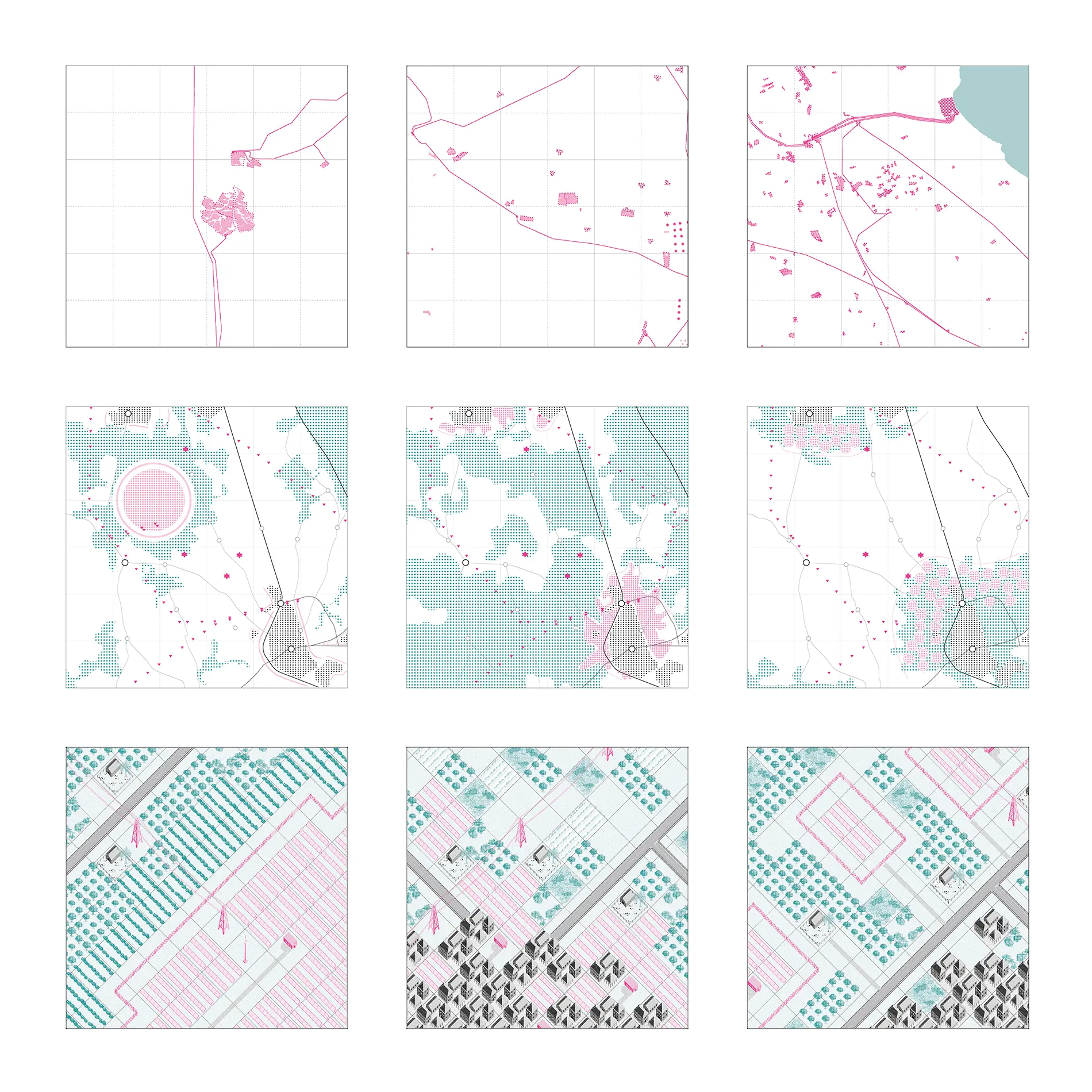
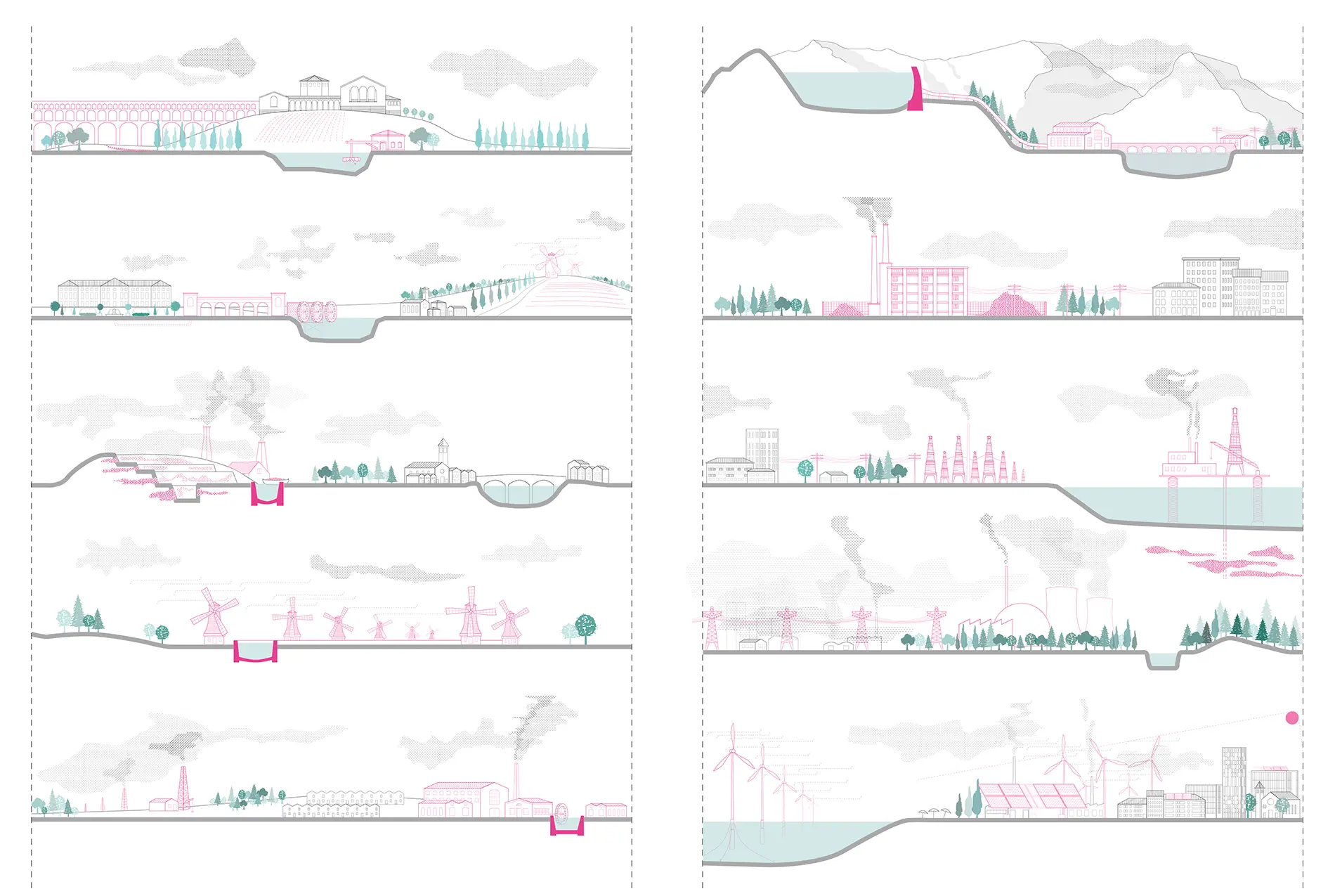
Energy production responds to fundamental human needs. Therefore, since ancient times, buildings and facilities aimed at producing energy have drawn new shapes on the territories and infrastructure landscapes.
Nowadays, because of the climate change challenges and the consequent spread of renewable energies ¬– whose link with the Earth’s resources is strong and evident – energy production seems to increasingly become and impactful activity on the landscape. This impact – usually negatively evaluated – often causes a conflict between those who consider the preservation of the natural landscapes as a priority, and those who turn the gaze more on the ecological and environmental emergency.
Within this complex and multifaced scenario, the main key issues of the research are:
– What is a sustainable energy landscape, which opportunities does it offer, and which are the current challenges?
– Designing new solar energy landscapes, what room for manoeuvre does the landscape architecture project have?
– How can the shape of solar energy facilities re-design contemporary landscapes?
This research deals with the topic of morphological studies and architectural design of photovoltaic facilities as a tool to manage the current energy transition through the landscape architecture, and as opportunities to create sustainable, cultural, and quality landscapes.
The importance of conceiving photovoltaic fields not as temporary and unplanned objects but as architectures that are part of our urban and rural landscapes is the main thesis of this research. Because if it is true that photovoltaic fields may not just be temporary infrastructures but buildings, then it is also true that we can conceive of those buildings as works of architecture.
From a methodological point of view, the research combines an analytical approach and a research-by-design method.
One of the main aims of the research is to identify scalable design strategies for the project of new large-scale renewable energy plants.The research ambition is to impact contemporary attitudes in energy plant design activity, proposing new landscape typologies whose cultural values could be acknowledged, shared and enjoyed.
The research overlaps with the main goals of the ONU Agenda 2030 and the European Green Deal 2050, and includes the instances and the debates promoted both by associations and organizations for landscape quality preservation – e.g.: Council of Europe Landscape Convention, Europa Nostra, etc. – and the environmentalist activists and associations.
The thesis states that solar power plants are comparable to production factories, and their design belongs to the realm of architectural design. Until now, solar fields have been considered as temporary infrastructures which has led to lower attention to design qualities and a neglect of these facilities.
At the beginning of the thesis, the relevant contribution of architecture in the design of energy plants and landscapes becomes evident through the study of best practices. After the theoretical and historical framing, the solar energy landscapes are selected for the following studies. The research investigates the architectural forms that these infrastructures have generated in contemporary landscapes (case study analysis). Finally, the design experimentations suggest that the design of these energy plants not only can follow the parameters of architectural composition but also has the potential to design landscapes rich in qualities, to be discussed and evaluated together with the local communities and all the actors involved.
In this way, the architectural discipline can play a key role in designing and managing the current challenges of the energy transition, applying its strategies and methods to design renewable energy production spaces, and sustainable contemporary and future landscapes.