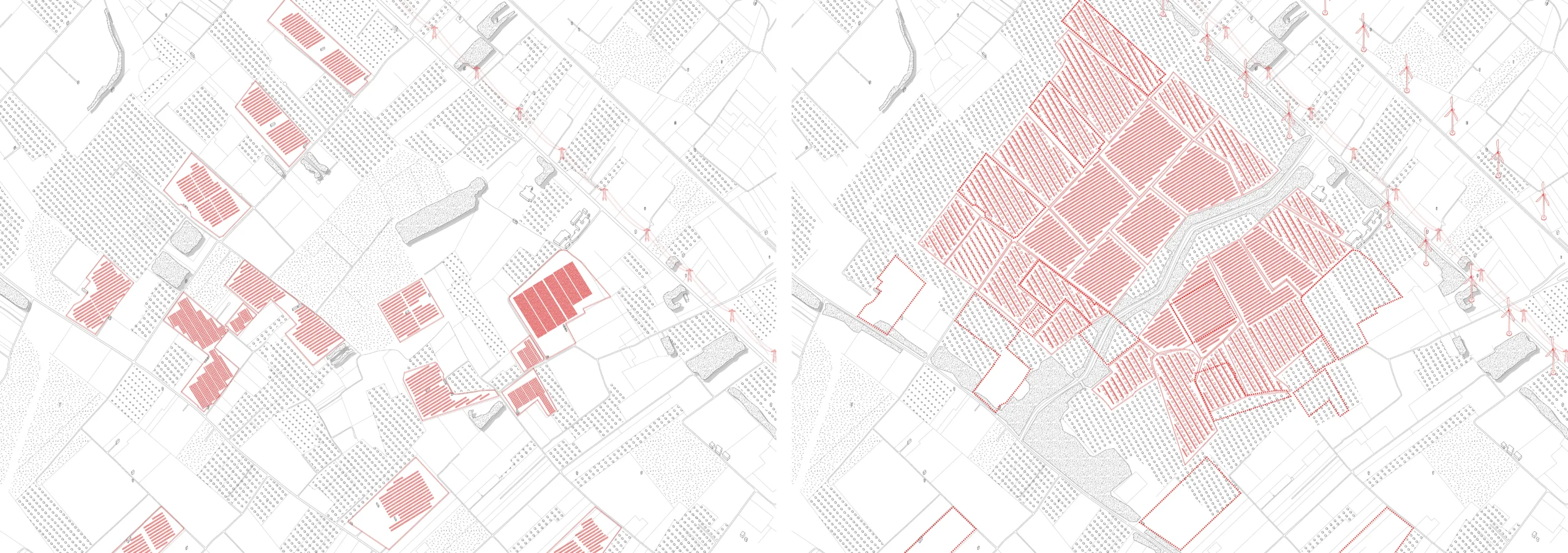
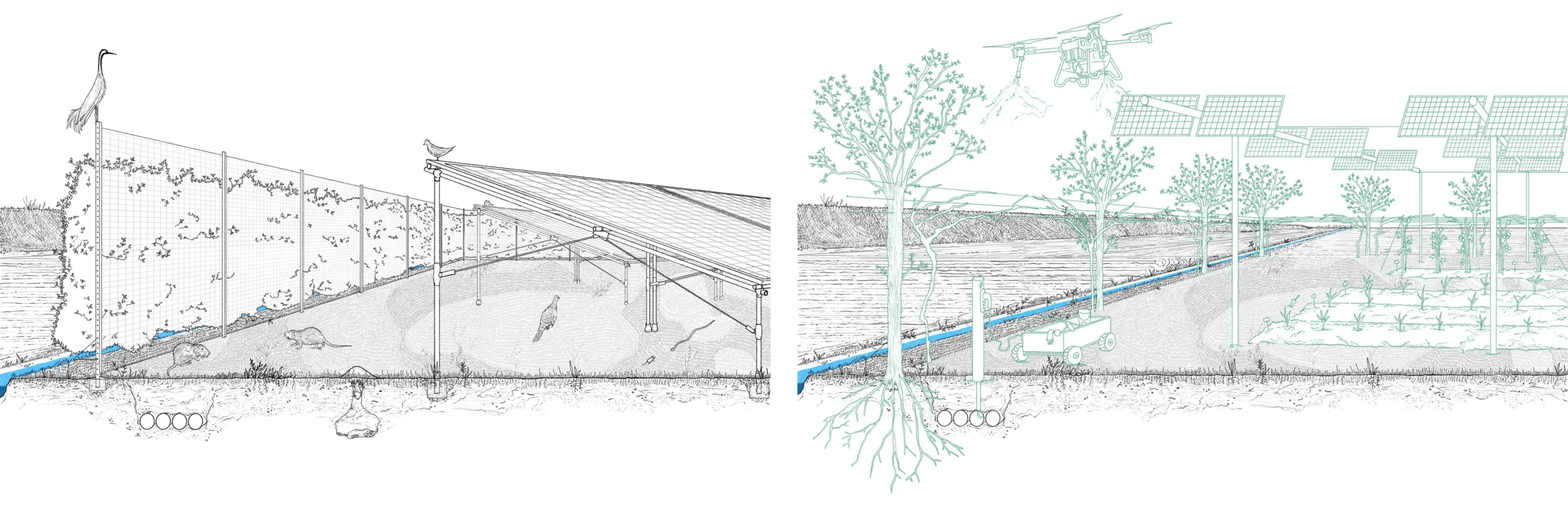
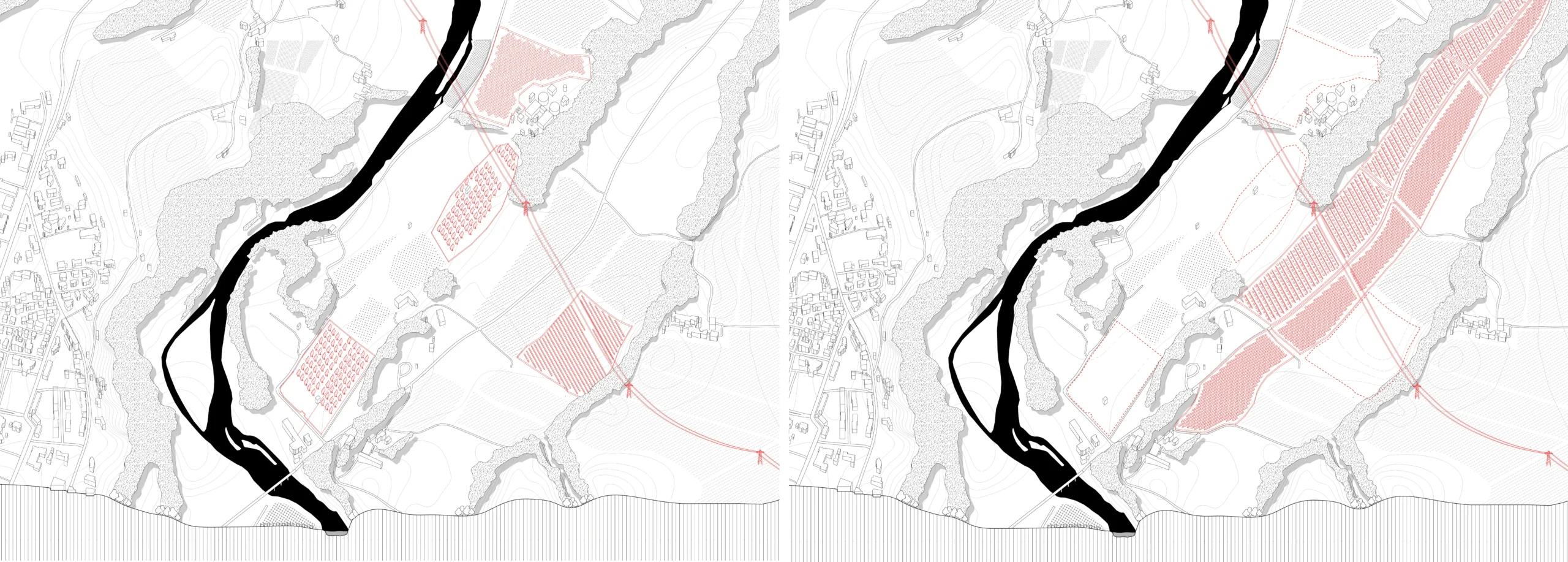
Funded within the PRIN 2022 national programme, the project investigates the challenge of rethinking the future of ground-based photovoltaic fields at the end of their life cycle, framing them as strategic opportunities for the ecological and spatial regeneration of territories. While the international debate has largely focused on new installations or building-integrated photovoltaics, this research aims to develop analytical methods, design tools and design strategies for reuse, decommissioning, revamping and transformation of existing photovoltaic fields spread across the Italian landscape, reframing them as potential drivers of ecological regeneration and spatial innovation.
By combining architectural, geospatial, landscape, and agronomic approaches, Next Generation Solar Landscapes seeks to redefine the relationship between energy production, land use, and landscape design. The research embraces a multidisciplinary team of three Research Unit.
- Politecnico di Torino (RU1), coordinated by Prof. Elena Vigliocco, with a team composed of architects, urban designers, and geomatics experts, is the lead unit of the project that has guided and developed the methodological and design framework of the research. Based on GIS-based mapping, spatial analysis, and morphological interpretation of photovoltaic landscapes, the team developed all the design strategies and transformation scenarios of the three selected case studies.
- Politecnico di Milano (RU2), coordinated by Prof. Sara Protasoni, contributes the perspective of landscape architecture, focusing on revamping, decommissioning and renaturalization design strategies and “what if” scenarios
- • Università degli Studi di Torino (RU3), coordinated by Prof. Amedeo Reyneri di Lagnasco, brings the expertise of agronomy and environmental sciences, addressing the ecological and productive impacts of land affected by ground-based photovoltaic installations.
The project is articulated into three main Work Packages (WP):
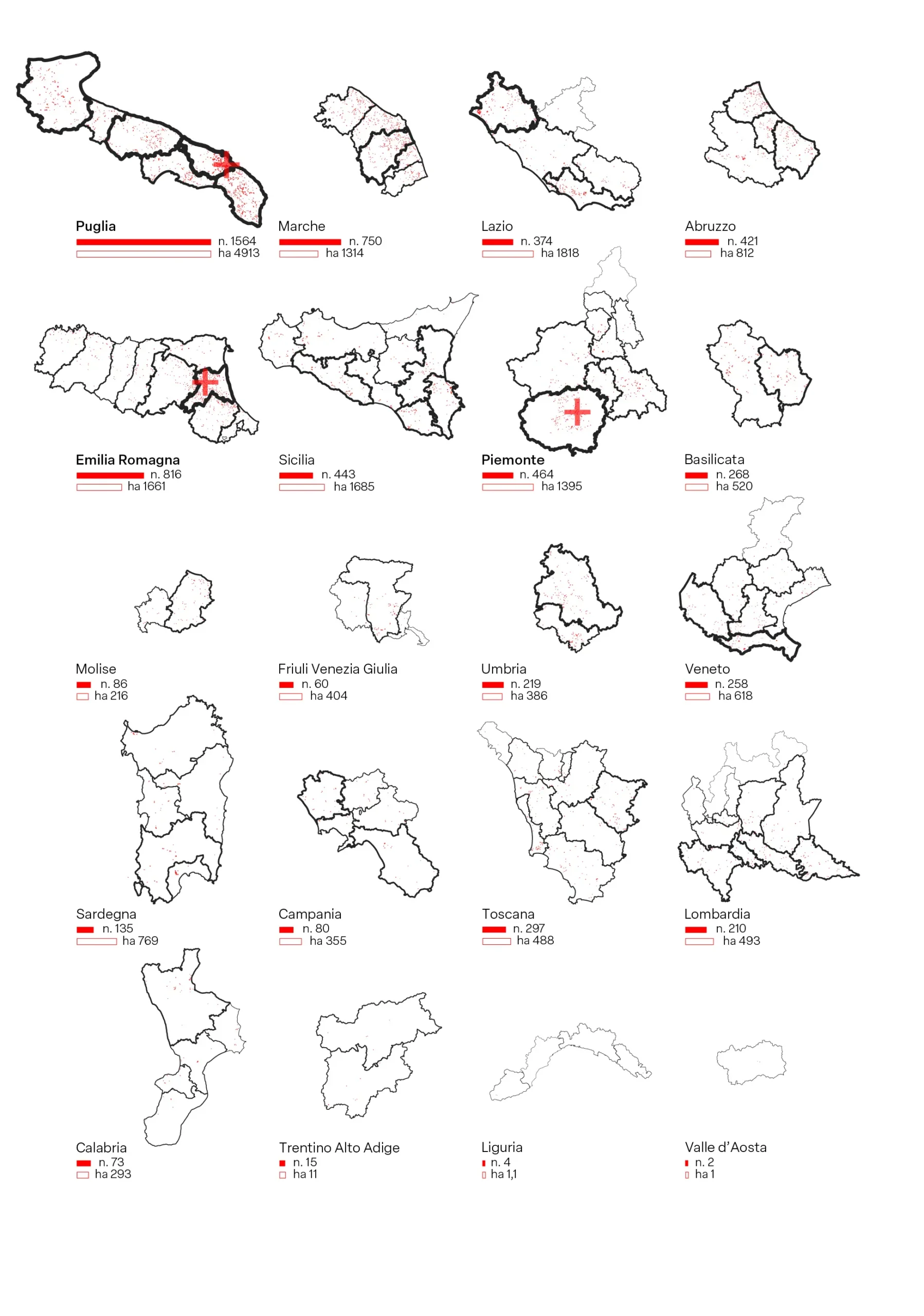
- WP1 – Photovoltaic landscapes and successful regeneration initiatives: a national-scale mapping and statistical analysis of ground-based photovoltaic fields, aimed at identifying spatial distribution, density, and typological characteristics of photovoltaic fields in each Italian region, providing a systematic overview of their territorial footprint;
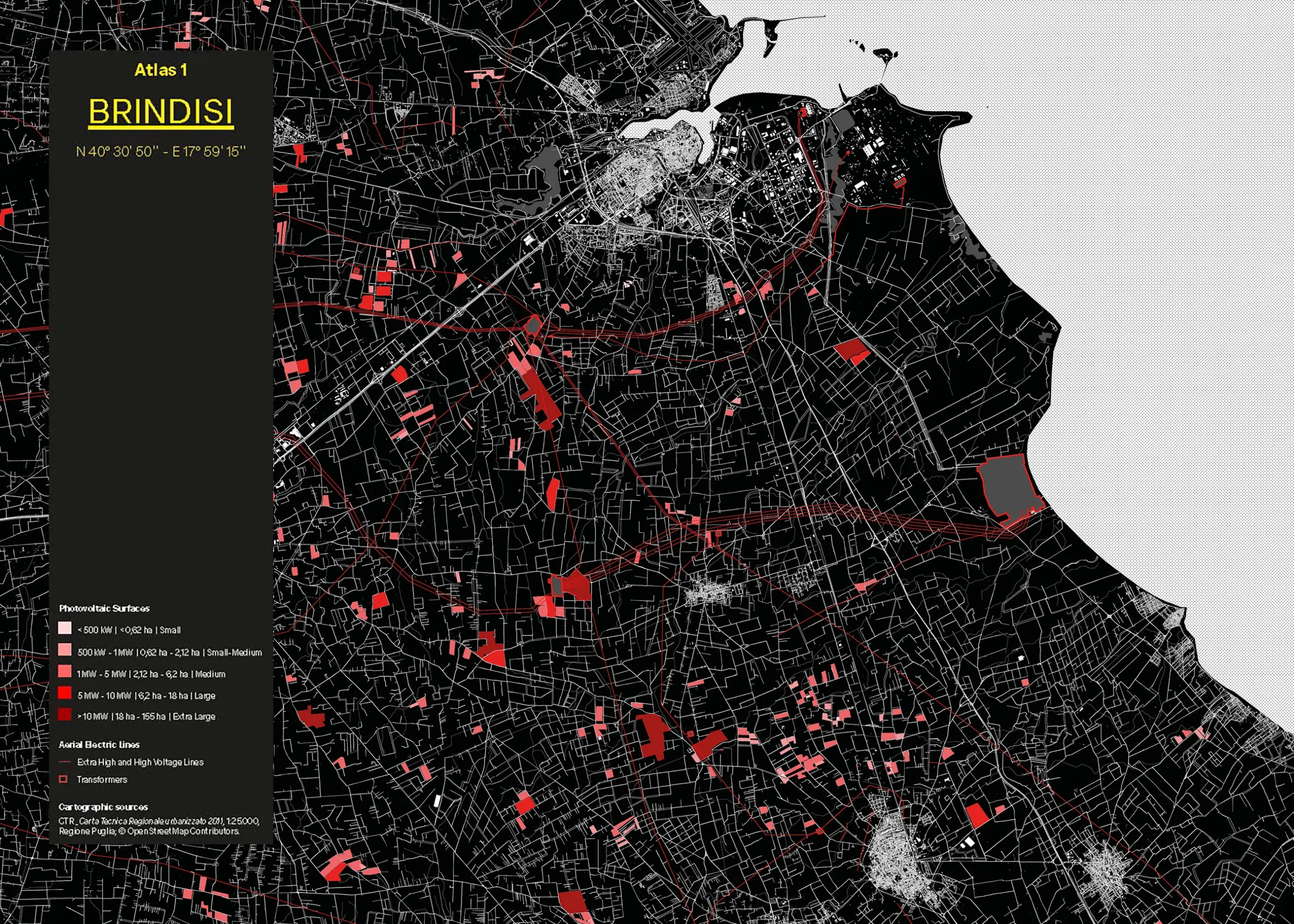
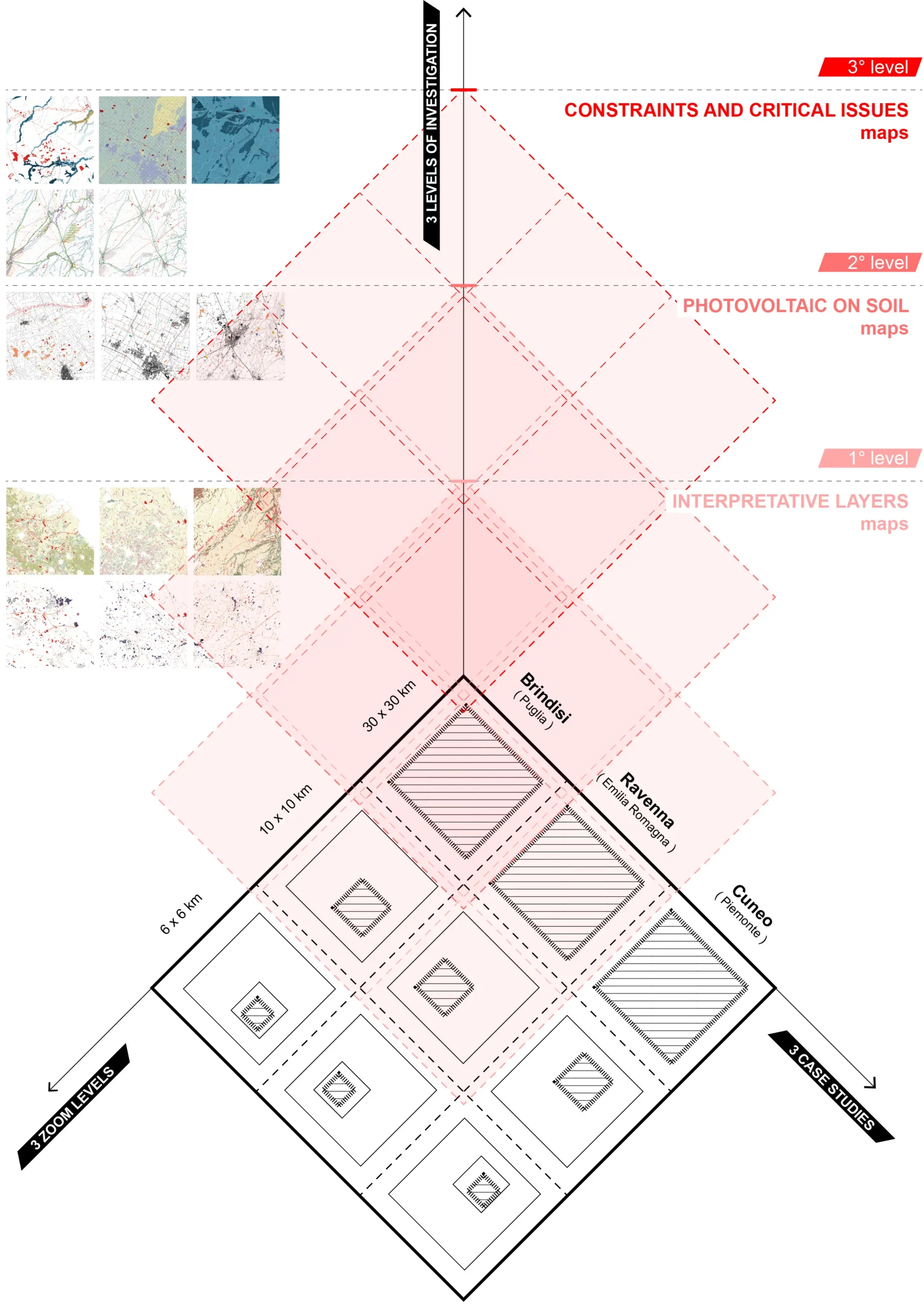
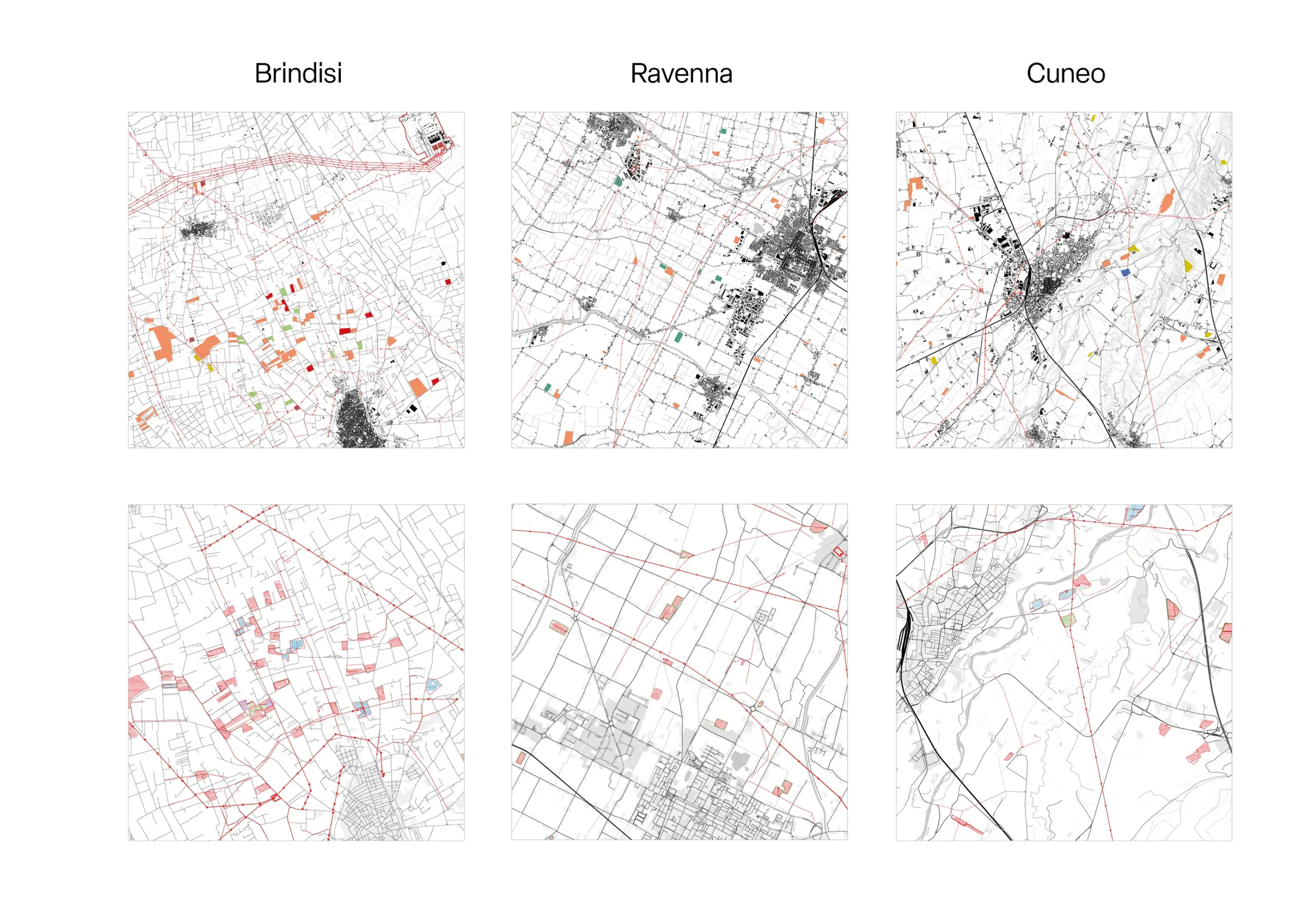
- WP2 – Photovoltaic landscapes mapping and testing: a multiscalar and comparative mapping of three high-density and emblematic photovoltaic territories Brindisi (Puglia), Ravenna (Emilia Romagna), and Cuneo (Piedmont). Each case study explores site-specific design hypotheses for decommissioning, revamping or ecological reuse.
- WP3 – Regeneration solar landscapes Toolkit: a development of a Good Practice Toolkit providing design guidelines and operative frameworks for the spatial renewal of end-of-life photovoltaic fields, supporting public administrations, plannes and designers in managing the energy landscape transition.
Methodologically, the research integrates digital geo-information tools, GIS-based tools, morphological analysis, and design-based approach. Starting from the interpretation of the spatial structure of photovoltaic fields, the team developed a multi-scalar and multi-layered analytical and comparative matrix combining quantitative data with qualitative interpretation.
The resulting Atlas of Italian Solar Landscapes offers not only a descriptive mapping of the phenomenon but also an interpretative platform to support design-oriented decision-making, and the development of design scenarios for the adaptive reuse, reconfiguration, and ecological and landscape reintegration of end-of-life photovoltaic fields.
The project outcomes include:
- a national geodatabase of ground-based photovoltaic fields;
- a comparative atlas of three solar territories;
- and a toolkit of design and policy strategies for the regeneration of end-of-life photovoltaic landscapes.
By integrating architectural reasoning with landscape, agronomic and geomatic disciplines, Next Generation Solar Landscapes research demonstrates that the design of solar landscape cannot be separated from questions of urban form, ecology, and land use. The research thus contributes to a broader rethinking of how renewable energy infrastructures can shape, and be shaped by, the landscapes in which they are embedded.
The results of the project have been presented at international conferences and in scientific publications, including the open access book Designing Forms for Future Solarscapes. A Vision for the Italian Palimpsest (LetteraVentidue Edizioni), which brings together some of the results of the PRIN research.
Book website link: https://letteraventidue.com/it/libri/designing-forms-for-future-solarscapes-vigliocco
The project contributes to the international debate on energy transition and landscape design, positioning decommissioned photovoltaic fields as catalysts for a new generation of solar territories, and showing how the end-of-life of photovoltaic fields can become an opportunity to generate new forms of ecological and territorial balance.