This project represents a systematic and multidisciplinary research ordered by the Department for Regional Affairs and Autonomies (DARA) and carried out in collaboration between CNR ISSIRFA (lead partner), EURAC Research (section of the Institute of Comparative Federal Studies) and FULL in order to fill a significant knowledge gap in the panorama of studies on European territorial cooperation.
The European Groupings of Territorial Cooperation (EGTCs), established under EC Regulation 1082/2006, are the first European cooperation structures to be granted legal personality. They evolved from forms of cross-border cooperation started in the 1950s, and gained strategic importance with the Interreg programmes (1989) until the recognition of territorial cooperation as a macro-objective of European cohesion policy (2007).
The research focuses on the growing relevance of EGTCs in the post-pandemic context, where COVID-19 highlighted both the fragility of sub-national integration processes – with the unilateral closures of national borders – and the strengthening of a coordinated movement of border regions claiming specific recognition and greater dissemination of cross-border public services.
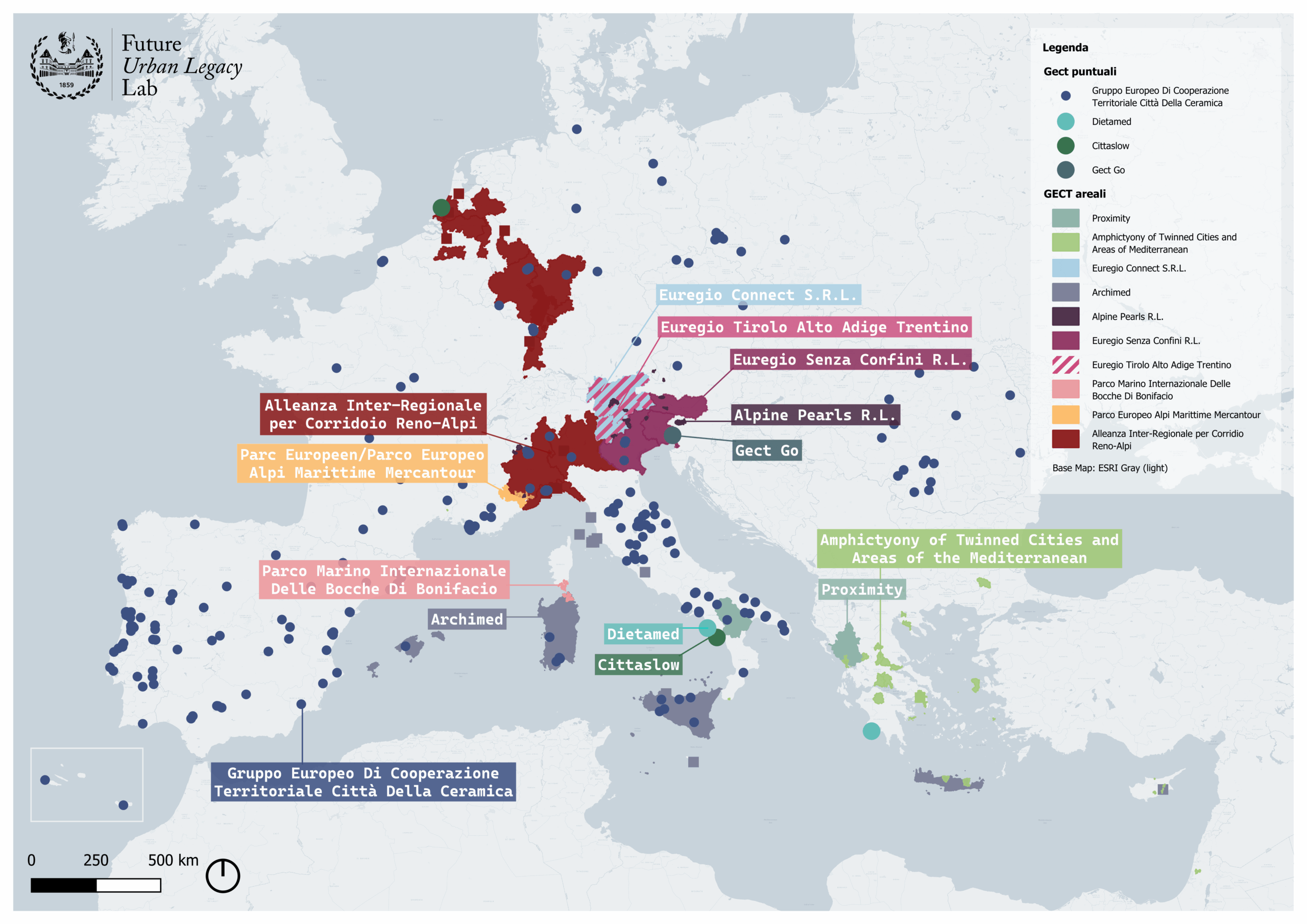
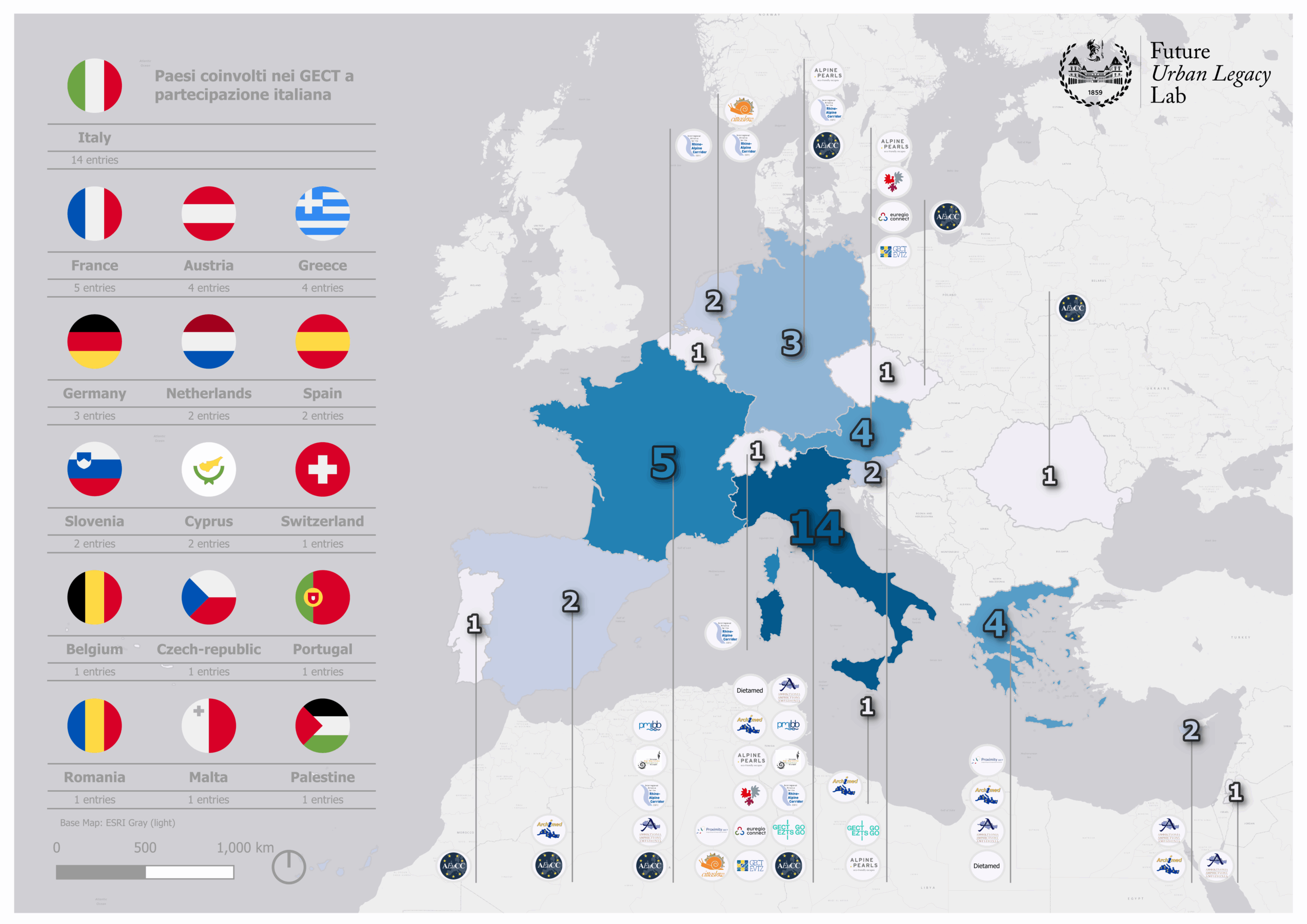
The project analyses the 14 EGTCs with Italian participation officially registered with the Committee of the Regions (out of a total of 88 in Europe), which are characterised by considerable territorial, institutional and functional heterogeneity. This diversity – ascribable to specific territorial characteristics, longevity, pursued objectives, governance models, funding sources and levels of integration – calls for a systematic analytical approach that has been lacking until now.
The multi-disciplinary methodology combines legal-institutional, territorial and strategic-functional analysis through four operational phases:
- preliminary framing with comprehensive mapping and structured questionnaires;
- comparative analysis with taxonomy and modelling;
- in-depth interviews with the 14 case studies;
- and the elaboration of policy-oriented recommendations for DARA.
FULL conducts the analysis of the territorial aspects of EGTCs, focusing on spatial dimensions, multi-level governance and operational performance. The research examines internal and external governance models, organisational and financial dynamics, contextualising them in the European territorial cooperation landscape. Particular attention is devoted to the litterature review, as well as to the identification of the distinctive features of the most effective experiences in order to gain an understanding of the factors that determine operational success or criticality.
The objective is to produce in-depth scientific knowledge of the legal, organisational and operational forms of the Italian EGTCs, developing taxonomies and systematic comparisons in order to identify performance improvement guidelines. The project also aims at facilitating the exchange of experiences and good practices among EGTCs, supporting DARA in the definition of policies and guidelines for ex-ante evaluations and future assessments.
The results will include a concluding scientific report with policy-oriented recommendations, operational guidelines for EGTCs, academic publications and a public presentation event. The dissemination activities will involve diversified stakeholders – EGTCs, local institutions, civil society, research centres – using the communication channels of the National Research Council – Institute for Studies on Regional, Federal and Autonomous Systems “Massimo Severo Giannini” (CNR ISSIRFA).
Thanks to ITALIAE, it will be possible to set up the first systematic study on Italian EGTCs, providing a solid empirical basis for evidence-based policies and scientific support for the strengthening of European territorial cooperation in a context of increasing cross-border challenges.